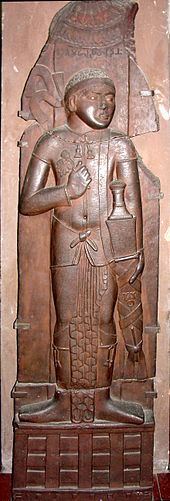
King Rudradaman and its legacy 

 Describe Rudradaman’s Rule and the Extent of His Empire

Rudradaman’s reign as the Western Satrap was characterized by both territorial expansion and the consolidation of his rule in the western regions of the Indian subcontinent. His empire extended across what is now Gujarat and parts of Maharashtra, with his capital at Ujjain. Under his leadership, the Western Satraps became a prominent regional power in the 2nd century AD, influencing the political dynamics of the time.

Rudradaman’s rule was known for its stability and efficient administration. He managed to create a well-structured governance system that allowed for the effective collection of revenue, maintenance of law and order, and the development of trade and commerce. This stability contributed to the prosperity of his subjects and his empire.

 Highlight His Major Achievements and Contributions as a Ruler

Military Campaigns: Rudradaman was a formidable military leader who conducted successful campaigns, both in defense of his territory and in expanding his dominion. He managed to defend his realm against external threats and enhance his territories, ensuring the security of his subjects.

Economic Prosperity: Under Rudradaman’s rule, the economy of the Western Satraps flourished. His administration promoted trade and commerce, contributing to the economic well-being of the region. This prosperity is evident from the numerous coins minted during his reign, reflecting the stability and wealth of his empire.

Cultural Patronage: Rudradaman was not just a military leader; he was also a patron of art and culture. His support for cultural endeavors led to the creation of various architectural and artistic marvels in his domain. This cultural patronage added to his legacy and the cultural richness of his territories.

Infrastructure Development: Rudradaman is associated with the construction of various monuments and inscriptions, including the famous Junagadh Inscription. His contributions to infrastructure and historical records have provided valuable insights into the socio-political landscape of his time.

Rudradaman’s rule as the Western Satrap was marked by a balanced approach to governance, combining military prowess with economic prosperity and cultural enrichment. His achievements and contributions as a ruler left a lasting legacy that continues to be studied and appreciated today.

Rudradaman-I

Conflict with the Satavahanas

 Explanation of Historical Conflicts and Interactions

Rudradaman’s reign was marked by significant historical conflicts and interactions with the Satavahanas, who ruled over much of the Deccan region during the same period. The primary source of these conflicts was territorial expansion and the desire to assert dominance over key strategic regions.

Rudradaman and the Satavahana ruler, Gautamiputra Satakarni, clashed over the control of the western Deccan, including parts of present-day Maharashtra. The conflict arose due to the overlapping territorial ambitions of both rulers. Both Rudradaman and Gautamiputra sought to extend their influence over these fertile and resource-rich lands.

These conflicts were not just military in nature but also had a diplomatic dimension. Both rulers engaged in strategic alliances and negotiations to gain the upper hand. The Deccan region became a battleground for asserting dominance, and the interactions between the Western Satraps and the Satavahanas were significant in shaping the political landscape of the time.

 Outcome and Significance of These Conflicts

The outcome of the conflicts between Rudradaman and the Satavahanas was not decisively in favor of either party, and they often resulted in shifting territorial boundaries. These conflicts, however, had several noteworthy consequences.

Stalemate: The clashes between the Western Satraps and the Satavahanas often resulted in a stalemate, with neither ruler achieving a complete victory. This led to a dynamic and constantly changing political landscape in the region.

Territorial Boundaries: The conflicts influenced the shifting of territorial boundaries, which sometimes favored one side over the other. The Deccan region continued to be a contested zone for years to come.

Cultural Exchange: The interactions between the two powers facilitated cultural exchange, trade, and the movement of people and ideas. This exchange enriched the cultural diversity of the region.

Historical Documentation: These conflicts are documented in historical inscriptions, such as the Junagadh Inscription, which provides valuable insights into the power struggles and diplomacy of the time.

The significance of these conflicts lies in their role in shaping the complex and multifaceted history of the 2nd century AD in the Indian subcontinent. The interactions between the Western Satraps and the Satavahanas are a testament to the intricate web of regional powers and their influence on each other during this era.

Cultural and Architectural Legacy

 Rudradaman’s Contributions to Art, Culture, and Architecture

Rudradaman’s rule was not only defined by his military and political achievements but also by his significant contributions to art, culture, and architecture. His reign witnessed a flourishing of these aspects, leaving a lasting impact on the cultural landscape of his empire.

Cultural Patronage: Rudradaman’s patronage of art and culture encouraged the development of various artistic forms. He was known for supporting poets, scholars, and artists who contributed to the enrichment of the cultural milieu of his time.

 Notable Monuments or Structures Associated with Him

While the specifics of architectural achievements associated with Rudradaman are limited, one notable and widely recognized monument linked to him is the Junagadh Inscription. This inscription is a remarkable historical record that provides insights into Rudradaman’s reign and the contemporary political and cultural climate.

The Junagadh Inscription is engraved on a rock in the Girnar Hill region of present-day Gujarat. It is not just a monument but a historical testament. The inscription details Rudradaman’s achievements, including his military campaigns, victories, and territorial conquests. It also sheds light on his patronage of various religious sects, especially Buddhism. This inscription, written in the Brahmi script, is a valuable source for historians and archaeologists in understanding the political and cultural context of the time.

Additionally, Rudradaman’s reign likely saw the construction of other structures and monuments, but many have not survived to the present day, making the Junagadh Inscription a particularly crucial relic for studying his architectural legacy.

Rudradaman’s contributions to art, culture, and architecture, as exemplified by the Junagadh Inscription, showcase his role as a ruler who recognized the importance of not only political power but also the preservation and promotion of the cultural heritage of his realm. His legacy in this aspect continues to be an intriguing subject of study for historians and archaeologists.

Thank you for your time and consideration…
@Puja Singh…

 King Rudradaman and its legacy   Describe Rudradaman’s Rule and the Extent of His Empire Rudradaman’s reign as the Western Satrap was characterized by both territorial expansion and the consolidation of his rule in the western regions of the Indian subcontinent. His empire extended across what is now Gujarat and parts of Maharashtra, with his capital at Ujjain. Under his leadership,

 Wars of the Shungas

War and conflict characterised the Shunga period. They are known to have warred with the Kalingas, Satavahanas, the Indo-Greeks, and possibly the Panchalas and Mathuras.

The Shunga Empire’s wars with the Indo-Greek Kingdom figure greatly in the history of this period. From around 180 BCE the Greco-Bactrian ruler Demetrius conquered the Kabul Valley and is theorised to have advanced into the trans-Indus to confront the Shungas.The Indo-Greek Menander I is credited with either joining or leading a campaign to Pataliputra with other Indian rulers; however, very little is known about the exact nature and success of the campaign. The net result of these wars remains uncertain.

wars-of-shungas-dynasty
Vedika pillar with “Yavana” Greek warrior. Bharhut, Madhya Pradesh, Shunga Period, c. 100-80 BC. Reddish brown sandstone. Indian Museum, Calcutta.

Literary evidence


edit

Several works, such as the Mahabharata and the Yuga Purana describe the conflict between the Shungas and the Indo-Greeks.

Military expeditions of the Shungas

edit

Scriptures such as the Ashokavadana claim that Pushyamitra toppled Emperor Brihadratha and killed many Buddhist monks. Then it describes how Pushyamitra sent an army to Pataliputra and as far as Sakala (Sialkot), in the Punjab, to persecute Buddhist monks.

War with the Yavanas (Greeks)


edit

The Indo-Greeks, called Yavanas in Indian sources, either led by Demetrius I or Menander I, then invaded India, possibly receiving the help of Buddhists. Menander in particular is described as a convert to Buddhism in the Milindapanha.

The Hindu text of the Yuga Purana, which describes Indian historical events in the form of a prophecy, relates the attack of the Indo-Greeks on the Shunga capital Pataliputra, a magnificent fortified city with 570 towers and 64 gates according to Megasthenes, and describes the impending war for city:

Then, after having approached Saketa together with the Panchalas and the Mathuras, the Yavanas, valiant in battle, will reach Kusumadhvaja “the town of the flower-standard”, Pataliputra. Then, once Puspapura (another name of Pataliputra) has been reached and its celebrated mud-walls cast down, all the realm will be in disorder

— Yuga Purana

However, the Yuga Purana indicates that the Yavanas (Indo-Greeks) did not remain for long in Pataliputra, as they were faced with a civil war in Bactria.

Western sources also suggest that this new offensive of the Greeks into India led them as far as the capital Pataliputra:

Those who came after Alexander went to the Ganges and Pataliputra

— Strabo 
wars-of-shungas-dynasty

Battle on the Sindhu river


edit

An account of a direct battle between the Greeks and the Shunga Dynasty is also found in the Mālavikāgnimitram, a play by Kālidāsa which describes a battle between a squadron of Greek cavalrymen and Vasumitra, the grandson of Pushyamitra, accompanied by a hundred soldiers on the “Sindhu river”, in which the Indians defeated a squadron of Greeks and Pushyamitra successfully completed the Ashvamedha Yagna. This river may be the Indus river in the northwest, but such expansion by the Shunga dynasty is unlikely, and it is more probable that the river mentioned in the text is the Sindh River or the Kali Sindh River in the Ganges Basin.

Epigraphic and archaeological evidence

edit

Dhanadeva-Ayodhya inscription

edit

Ultimately, Shunga dynasty seems to have extended to the area of Ayodhya. Shunga inscriptions are known as far as Ayodhya in northern central India, in particular, the Dhanadeva-Ayodhya inscription refers to a local king Dhanadeva, who claimed to be the sixth descendant of Pushyamitra. The inscription also records that Pushyamitra performed two Ashvamedhas (victory sacrifices) in Ayodhya.

Yavanarajya inscription

edit

wars-of-shungas-dynasty
The Yavanarajya inscription, dated to “year 116 of Yavana hegemony”, probably 70 or 69 BCE, was discovered in Mathura. Mathura Museum.

The Greeks seem to have maintained control of Mathura. The Yavanarajya inscription, also called the “Maghera inscription”, discovered in Mathura, suggests that the Indo-Greeks were in control of Mathura during the 1st century BCE. The inscription is important in that it mentions the date of its dedication as “The last day of year 116 of Yavana hegemony (Yavanarajya)”. It is considered that this inscription is attesting the control of the Indo-Greeks in the 2nd and 1st centuries BCE in Mathura, a fact that is also confirmed by numismatic and literary evidence. Moreover, it does not seem that the Shungas ever ruled in Mathura or Surasena since no Shunga coins or inscriptions have been found there.

wars-of-shungas-dynasty


The Anushasana Parva of the Mahabharata affirms that the city of Mathura was under the joint control of the Yavanas and the Kambojas.

Later however, it seems the city of Mathura was retaken from them, if not by the Shungas themselves, then probably by other indigenous rulers such as the Datta dynasty or the Mitra dynasty, or more probably by the Indo-Scythian Northern Satraps under Rajuvula. In the region of Mathura, the Arjunayanas and Yaudheyas mention military victories on their coins (“Victory of the Arjunayanas”, “Victory of the Yaudheyas”), and during the 1st century BCE, the Trigartas, Audumbaras and finally the Kunindas also started to mint their own coins, thus affirming independence from the Indo-Greeks, although the style of their coins was often derived from that of the Indo-Greeks.

Heliodorus pillar

edit

wars-of-shungas-dynasty
The Heliodorus pillar was built in Vidisha under the Shungas, at the instigation of Heliodorus, ambassador of the Indo-Greek king Antialcidas. The pillar originally supported a statue of Garuda. Established circa 100 BCE.


Very little can be said with great certainty. However, what does appear clear is that the two realms appeared to have established normalised diplomatic relations in the succeeding reigns of their respective rulers. The Indo-Greeks and the Shungas seem to have reconciled and exchanged diplomatic missions around 110 BCE, as indicated by the Heliodorus pillar, which records the dispatch of a Greek ambassador named Heliodorus, from the court of the Indo-Greek king Antialcidas, to the court of the Shunga emperor Bhagabhadra at the site of Vidisha in central India.


Thank you for your time and consideration 🙏…

@Puja Singh…

 Wars of the Shungas War and conflict characterised the Shunga period. They are known to have warred with the Kalingas, Satavahanas, the Indo-Greeks, and possibly the Panchalas and Mathuras. The Shunga Empire’s wars with the Indo-Greek Kingdom figure greatly in the history of this period. From around 180 BCE the Greco-Bactrian ruler Demetrius conquered the Kabul Valley and is theorised to have advanced into the trans-Indus to confront the Shungas.The

 Puducherry

exploring-charm-of-puducherry


          Puducherry, formerly known as Pondicherry, gained its significance as “The French Riviera of the East” after the advent of French colonialisation in India. Puducherry is the Tamil interpretation of “new town” and mainly derives from “Poduke”, the name of the marketplace or “port town” for Roman trade in the 1st century, as mentioned in the Periplus of the Erythraean Sea. The settlement was once an abode of learned scholars versed in the Vedas, hence it was also known as Vedapuri.

History

The history of Puducherry can broadly be classified into two periods: pre-colonial and colonial. The pre-colonial period started with the reign of the Pallavas, who ruled the empire from 325 to 900, after which came the Chola dynasty, from 900 to 1279, and the Pandya dynasty, from 1279 to 1370. During the 14th century, the city was under the rule of Naikship of Gingee of the Vijayanagara Empire, from 1370 to 1614, when it was conquered by the Sultan of Bijapur, who ruled it from 1614 to 1638. It was during this period that Portuguese and Danish merchants used it as a trading center.

The colonial period began with the Portuguese, the first Europeans to conduct trade in textiles, in 1521, and subsequently, the Dutch and the Danes in the 17th century.

The prospering trade of Puducherry attracted the French, and the predominant feature of the town was laid by the French pioneer Francois Martin in the form of a French settlement, in 1674. In 1693, Puducherry was captured by the Dutch and subsequently restored in 1699, with the Treaty of Ryswick.

The French acquired Mahé in 1720, Yanam in 1731, and Karaikal in 1738. The British captured the city from the French but returned it following the Treaty of Paris, in 1763. This Anglo-French war continued until 1814, where France found itself in control of the settlements of Puducherry, Mahé, Yanam, Karaikal, and Chandernagor, even during the British period, until 1954. It was a reign of 138 years under the French, who on 31 October 1954 left Indian shores following a de facto transfer of power.

Nearby places such as Arikamedu, Ariyankuppam, Kakayanthoppe, Villianur, and Bahour, which were colonised by the French East India Company over a period of time and later became the union territory of Pondicherry, have recorded histories that predate the colonial period.

Poduke or Poduca (marketplace) was a Roman trading destination from the third century BCE. Poduca has been identified as possibly being Arikamedu (now part of Ariyankuppam), located about 2 miles (3.2 km) from the modern city of Pondicherry. The area was part of the Pallava Kingdom of Kanchipuram in the 4th century. The Cholas of Thanjavur held it from the 10th to the 13th centuries, until it was replaced by the Pandya Kingdom, in the 13th century. The Vijayanagar Empire took control of almost all of southern India in the 14th century and maintained control until 1638, when they were supplanted by the Sultan of Bijapur.

In 1674, the French East India Company set up a trading centre at Pondicherry, and this outpost eventually became the chief French settlement in India. The French governor François Martin made remarkable improvements to the city and its commercial ties, facing at the same time strong opposition from the Dutch and the English. He entered into extended negotiations with the sultans of Golconda through the intercession of several roving French merchants and doctors who were in favour with the sultan.

Trading in jewellery and precious stones, which had become highly fashionable in European courts, was one among many activities. Five trading posts were established along the south Indian coast between 1668 and 1674. The city was separated by a canal into the French Quarter and the Indian Quarter.

exploring-charm-of-puducherry


On 21 August 1693, during the Nine Years’ War, Pondicherry was captured by the Dutch. The governor of Dutch Coromandel, Laurens Pit the Younger, sailed with a fleet of seventeen ships and 1,600 men from Nagapattinam and bombarded Pondicherry for two weeks, after which Francois Martin surrendered it. At the Peace of Ryswick, it was agreed by all parties to return conquered territories, and in 1699, Pondicherry was handed back to the French.

On 16 January 1761, the British captured Pondicherry from the French, but it was returned under the Treaty of Paris (1763), at the conclusion of the Seven Years’ War. The British took control of the area again in 1793, at the Siege of Pondicherry, amid the Wars of the French Revolution, and returned it to France in 1814.


On 18 March 1954, a number of resolutions were passed by the municipalities in Pondicherry, demanding an immediate merger with India. Some days later, similar resolutions were passed by the municipalities in Karaikal. The resolutions had the full support of the French Indian Councillors, popularly known as ministers, and the president of the representative assembly.

These municipalities represented roughly 90% of the population of the French possessions, and they called upon the government of France to take urgent and necessary measures to give effect to the wishes of the people. The government of India had made it clear that the cultural and other rights of the people would be fully respected.

They were not asking for the immediate transfer of de jure sovereignty of France. Their suggestion was that a de facto transfer of the administration should take place immediately, while French sovereignty should continue until the constitutional issue had been settled. Both India and France would have to make necessary changes in their respective constitutions. All this would take time, while the demand of the people was for an immediate merger without a referendum. The government of India was convinced that the suggestion which they made would help to promote a settlement, which they greatly desired.

On 18 October 1954, in a general election involving 178 people in municipal Pondicherry and the Commune of Panchayat, 170 people were in favour of the merger, and eight people voted against. The de facto transfer of the French Indian territories from French governance to the Indian union took place on 1 November 1954 and was established as the union territory of Pondicherry. The treaty effecting the de jure transfer was signed in 1956. However, due to opposition in France, the ratification of this treaty by the French National Assembly only took place on 16 August 1962.

Topography

The topography of Pondicherry is the same as that of coastal Tamil Nadu. Pondicherry’s average elevation is at sea level and includes a number of sea inlets, referred to locally as backwaters. Pondicherry experiences extreme coastal erosion as a result of a breakwater constructed in 1989, just to the south of the city. Where there was once a broad, sandy beach, now the city is protected against the sea by a 2-km-long seawall that sits at a height of 8.5 m above sea level.

Whilst there was an early seawall made by the French government in 1735, this was not “hard structure coastal defence” so much as an adjunct to the old shipping pier and a transition from the beach to the city.


A stroll through the French Quarter in New Orleans offers a captivating glimpse into the enduring influence of French culture on the city’s architecture, streets, and charming cafes.

exploring-charm-of-puducherry


Architecture:The architecture of the French Quarter is a visual feast that reflects its historical roots. Elegant buildings with wrought-iron balconies, hidden courtyards, and vibrant facades showcase a blend of French Creole and Spanish colonial styles. Walking along the narrow streets, one can’t help but feel transported to a bygone era, where the architectural legacy of French settlers is preserved in every corner.

Streets:The very layout of the streets in the French Quarter whispers tales of a French past. Names like Chartres, Bourbon, and Royal harken back to the city’s European origins. The cobblestone streets, meandering and filled with history, contribute to the area’s unique charm. It’s a place where the city’s French heritage is not just seen but felt underfoot, creating an ambiance that pays homage to centuries gone by.

Charming Cafes:Cafes in the French Quarter are not merely places to grab a quick bite; they are immersive experiences that transport visitors to a Parisian ambiance. Sidewalk cafes adorned with wrought-iron furniture and shaded by lush greenery beckon patrons to savor the moment. The leisurely pace, coupled with the aromatic allure of coffee, mirrors the unhurried charm of French cafe culture, providing a haven for both locals and visitors alike.

Enduring Legacy in Lifestyle:Beyond the physical aesthetics, the French influence continues to shape the lifestyle of New Orleans. The laissez-faire attitude prevails, encouraging residents and visitors alike to embrace the celebration of life. Music, art, and spontaneous gatherings are hallmarks of the city’s spirited lifestyle, mirroring the French joie de vivre that permeates the atmosphere.

Cuisine:The culinary scene in New Orleans is a delectable fusion of French, African, and Spanish flavors. The French influence on the city’s cuisine is unmistakable, with classic dishes like gumbo, jambalaya, and beignets showcasing a mastery of French culinary techniques. The art of savoring a meal, appreciating fresh ingredients, and embracing culinary diversity all speak to the enduring impact of French gastronomy on the city’s culinary identity.

Spiritual Retreats – Auroville and Aurobindo Ashram

Puducherry, a serene coastal town on the southeastern coast of India, is renowned for its spiritual retreats that attract seekers from around the world. Two prominent spiritual centers, Auroville and Aurobindo Ashram, stand as beacons of spiritual exploration and contemplation, offering a unique and transformative experience for visitors.


  • Auroville


Auroville, often referred to as the “City of Dawn,” was founded in 1968 by Mirra Alfassa, also known as “The Mother,” and designed by the architect Roger Anger. This experimental township is a harmonious blend of diverse cultures, traditions, and spiritual practices. The Matrimandir, a golden globe at the heart of Auroville, symbolizes the town’s spiritual focus and serves as a place for silent meditation. Auroville’s core philosophy is to realize human unity and promote sustainable living, making it a haven for those seeking inner peace, self-discovery, and a connection with the universal spirit.

exploring-charm-of-puducherry


Impact on Visitors

For visitors, Auroville offers a transformative experience. The serene ambiance, coupled with the emphasis on community living and spiritual exploration, fosters a sense of unity and connection. Many come seeking personal growth, introspection, and a break from the hustle and bustle of everyday life. The communal atmosphere and the focus on sustainable living leave a lasting impression on visitors, encouraging a reevaluation of priorities and a deeper connection with the world and oneself.

  • Aurobindo Ashram: A Center of Integral Yoga:

Founded by Sri Aurobindo and The Mother in the early 20th century, Aurobindo Ashram is a spiritual institution dedicated to the practice of Integral Yoga. The ashram’s main building, known as the Samadhi, is the final resting place of Sri Aurobindo and The Mother, and it attracts spiritual seekers and devotees from all walks of life. The ashram emphasizes the integration of the spiritual and material aspects of life, promoting a holistic approach to personal and collective well-being.

Impact on Visitors:

Visitors to Aurobindo Ashram often find solace in the peaceful surroundings and the emphasis on inner transformation. The teachings of Sri Aurobindo and The Mother guide individuals on a journey of self-discovery and spiritual evolution. The ashram provides a supportive environment for meditation, self-reflection, and the pursuit of a higher state of consciousness. Many visitors report a sense of tranquility and a renewed perspective on life after spending time within the ashram’s spiritual embrace.

 Along Puducherry’s Beaches


Puducherry’s coastline boasts pristine beaches that offer a haven for relaxation and adventure. Two of the most popular beaches are:


Promenade Beach:


  • This iconic promenade stretches for 1.5 kilometers, offering breathtaking views of the Bay of Bengal.
  • The beach is lined with French colonial architecture, vibrant street vendors, and swaying palm trees.
  • Popular activities include:
    • Witnessing the mesmerizing sunrise or sunset over the ocean.
    • Taking a leisurely stroll or jog along the promenade.
    • Building sandcastles with children.
    • Relaxing on the golden sand and soaking up the sun.
    • Indulging in delicious seafood at a charming beach shack.


Paradise Beach:


  • This idyllic beach is located about 8 kilometers from the city center and offers a tranquil escape from the city’s hustle.
  • Turquoise waters lap at pristine shores, and swaying palm trees provide shade for relaxation.
  • Popular activities include:
    • Sunbathing on the soft sand.
    • Swimming in the crystal-clear waters.
    • Trying thrilling water sports like surfing, kayaking, and paddleboarding.
    • Embarking on a scenic boat trip along the coast.
    • Spotting playful dolphins frolicking in the waves.


Additional Leisure Activities:


  • Auroville Beach: This secluded beach is located in Auroville, an international community dedicated to human unity and sustainable living. It offers a peaceful atmosphere and is perfect for swimming, sunbathing, and meditation.
  • Serenity Beach: This beach is known for its calm waters and clean sand. It is perfect for families with young children and those seeking a quiet escape.
  • Karaikal Beach: This beach is located about 130 kilometers from Puducherry and is known for its black sand and unique rock formations. It is a popular spot for birdwatching and exploring the nearby fishing villages.


Water Sports:


Puducherry offers a variety of water sports for the adventurous traveler. Some popular options include:


  • Surfing: The waves at Auroville Beach and Serenity Beach are perfect for surfing, especially for beginners.
  • Kayaking: Explore the mangroves and backwaters of Puducherry on a guided kayaking tour.
  • Paddleboarding: Enjoy the stunning coastline from a unique perspective on a stand-up paddleboard.
  • Banana boating: This thrilling ride is perfect for families and groups of friends.
  • Jet skiing: Experience the adrenaline rush of riding a jet ski across the waves.


Boat Trips:


  • Embark on a scenic boat trip along the Puducherry coastline.
  • Witness breathtaking views of the city, beaches, and historical monuments.
  • Spot playful dolphins frolicking in the waves.
  • Enjoy the cool sea breeze and the sound of the waves.
  • Choose from a variety of boat tours, ranging from short sunset cruises to longer day trips.


Festivals and Events:


Puducherry’s vibrant cultural calendar adds to its lively atmosphere. Some of the most popular festivals and events include:


  • International Kite Festival: Held in January, this festival sees the sky filled with colorful kites from all over the world.


  • International Theatre Festival: Held in February, this festival features a diverse range of theatrical performances from around the globe.
  • French Food Festival: Held in August, this festival celebrates the best of French cuisine with cooking demonstrations, tastings, and workshops.


  • Puducherry International Film Festival: Held in December, this festival showcases independent and international films from around the world.
  • Pongal: Celebrated in January, this South Indian harvest festival is marked by colorful processions, traditional dances, and special food offerings.


These festivals and events create a sense of community and cultural exchange, making Puducherry a dynamic and vibrant city. 


 A Fusion of Flavors in Puducherry

Puducherry’s culinary scene is a captivating tapestry, skillfully woven with threads of French and South Indian flavors. This unique blend promises an unforgettable culinary adventure for every traveler.

Must-Try Dishes:

  • Chettinad Cuisine: This fiery South Indian cuisine tantalizes the taste buds with its bold spices and aromatic curries. Don’t miss the Chettinad chicken, fish curry, and mutton biryani.
  • Fresh Seafood: Puducherry’s coastline offers an abundance of fresh seafood, cooked to perfection with a touch of French influence. Sample dishes like grilled prawns, coconut fish curry, and seafood platters.
  • Crêpes: Indulge in the classic French crêpes, available in both sweet and savory options. From the traditional crêpe Suzette to savory crêpes filled with cheese and vegetables, there’s something for everyone.
  • Filter Coffee: This strong, aromatic coffee is a must-try for all coffee lovers. Enjoy it in a traditional filter, or try it in a French café with a croissant.
  • French Pastries: Puducherry boasts a plethora of charming cafes serving delightful French pastries. From delicate macarons and buttery croissants to decadent cakes and éclairs, these pastries are a treat for the senses.

Popular Dining Spots:

  • Appachi: Experience the fiery flavors of Chettinad cuisine at Appachi, renowned for its authentic dishes and vibrant atmosphere.
  • Le Dupleix: This elegant French restaurant offers a fine dining experience with a menu showcasing classic French dishes alongside local seafood specialties.


  • La Maison Rose: Immerse yourself in the charm of Puducherry at this iconic pink-hued cafe. Enjoy delectable French crêpes, pastries, and coffee in a relaxed setting.


  • Bistro de Pondicherry: This charming bistro offers a delightful blend of French and Indian flavors. Sample its signature dishes like duck confit and fish tikka masala, while enjoying the colonial-era ambiance.


  • Auroville Bakery: Indulge in the freshly baked bread, pastries, and cakes at Auroville Bakery, known for its use of organic ingredients and sustainable practices.


  • Street Food Stalls: Don’t miss the vibrant street food scene in Puducherry. Sample local favorites like dosa, vada, and samosas, or try unique street food creations like French fries with masala chai.

Additional Culinary Delights:

  • French Fondue: Enjoy this classic French dish at a cozy restaurant, perfect for a romantic evening.
  • South Indian Thali: Immerse yourself in the traditional South Indian thali, featuring a variety of dishes served on a banana leaf.
  • Creole Cuisine: Discover the unique blend of French, Indian, and Tamil influences in Creole cuisine, offering dishes like seafood stew and chicken curry.
  • Coffee Culture: Explore the vibrant coffee culture in Puducherry, with cafes serving a variety of coffee styles from around the world.
  • Cooking Classes: Learn the secrets of French and South Indian cuisine by attending a cooking class, a fun and interactive way to experience the local flavors.


Whether you’re craving fiery South Indian curries, delicate French pastries, or a unique fusion of flavors, Puducherry’s culinary scene offers something to tantalize every taste bud. So, prepare to embark on a delicious adventure and discover the magic of Puducherry’s cuisine.


Finding Treasures in Puducherry’s Markets and Boutiques

Puducherry is a shopper’s paradise, offering a treasure trove of goods ranging from local handicrafts and textiles to unique souvenirs and international fashion. Get ready to embark on a shopping spree through bustling markets and charming boutiques, discovering hidden gems and authentic treasures.

Bustling Markets:

  • Goubert Market: This historic market is a must-visit for experiencing the vibrant local culture. Explore the stalls overflowing with fresh produce, spices, flowers, and handcrafted goods.
  • Sunday Market: This vibrant market comes alive every Sunday, showcasing a diverse range of local crafts, textiles, jewelry, and souvenirs.


  • Jipmer Market: This market specializes in handmade goods, offering a wide selection of leather bags, textiles, and handcrafted souvenirs.


Boutiques:

  • Kalinka Art Gallery: Discover a treasure trove of exquisite hand-painted fabrics, home decor items, and unique souvenirs at this renowned art gallery.


  • Anokhi: Immerse yourself in the colorful world of Indian textiles at Anokhi, offering a wide range of handcrafted cotton clothing and accessories for both men and women.


  • Auroville Handloom & Handicraft Emporium: Support sustainable practices and local artisans by exploring the Auroville Handloom & Handicraft Emporium, offering a diverse range of handcrafted goods made with natural materials.

Unique Souvenirs:

  • Hand-painted silks: Puducherry is known for its exquisite hand-painted silks, a perfect souvenir to bring home.
  • Hand-carved wooden sculptures: Discover intricate wooden sculptures depicting deities, animals, and other motifs.
  • Traditional incense and spices: Immerse yourself in the aromatic world of Indian spices and incense, a wonderful way to recreate the scents of Puducherry.
  • Locally handcrafted jewelry: Adorn yourself with unique and beautiful jewelry made from silver, gold, and precious stones.
  • Traditional textiles: Take home a piece of Indian culture with handloom sarees, cotton kurtas, and other traditional garments.

Practical Tips😎:

  • Bargaining: Don’t be afraid to bargain in the markets, especially with street vendors.
  • Local currency: Carry Indian rupees for purchases in the markets and smaller shops.
  • Eco-friendly choices: Support sustainable businesses and artisans by buying locally made and eco-friendly products.
  • Respectful interactions: Be mindful of local customs and dress modestly when visiting religious sites and markets.
  •  
exploring-charm-of-puducherry


Puducherry, a top tourist city in India, captivates visitors with its unique blend of French and Indian cultures. The city’s French Quarter showcases ornate architecture, charming streets, and inviting cafes, providing a glimpse into its colonial past. Spiritual retreats like Auroville and Aurobindo Ashram offer transformative experiences, emphasizing inner peace and self-discovery. The picturesque beaches, including Promenade Beach and Paradise Beach, offer seaside serenity with water sports and relaxation.

Puducherry’s diverse culinary scene combines French and South Indian flavors, inviting travelers to savor fusion cuisine. Cultural festivals, heritage villages, and bustling markets contribute to the city’s lively atmosphere, ensuring a vibrant calendar year-round. From exploring historical landmarks to indulging in a shopping extravaganza, Puducherry promises a rich tapestry of experiences. Encouraging readers to embark on their own journey, Puducherry beckons with its enchanting beauty, promising a travel adventure that seamlessly intertwines history, spirituality, and coastal charm.


Thank you for your time and your support 🙏🙏…

@Puja Singh…


 Puducherry           Puducherry, formerly known as Pondicherry, gained its significance as “The French Riviera of the East” after the advent of French colonialisation in India. Puducherry is the Tamil interpretation of “new town” and mainly derives from “Poduke”, the name of the marketplace or “port town” for Roman trade in the 1st century, as mentioned in


comprehensive-guide-to-goa


        Goa, state of Indiacomprising a mainland district on the country’s southwestern coast and an offshore island. It is located about 250 miles (400 km) south of Mumbai (Bombay). One of India’s smallest states, it is bounded by the states of Maharashtra on the north and Karnataka on the east and south and by the Arabian Sea on the west. The capital is Panaji (Panjim), on the north-central coast of the mainland district. Formerly a Portuguese possession, it became a part of India in 1962 and attained statehood in 1987. Area 1,429 square miles (3,702 square km). Pop. (2011) 1,457,723.


Panaji the state’s capital, while Vasco da Gama is its largest city. The historic city of Margão in Goa still exhibits the cultural influence of the Portuguese, who first voyaged to the subcontinent in the early 16th century as merchants, and conquered it soon thereafter, whereupon Goa became an overseas territory of the Portuguese Empire, part of what was then known as Portuguese India, and remained as such for about 456 years until it was annexed by India in 1961. Goa’s official language, which is spoken by a majority of its inhabitants, is Konkani.

Goa is visited by large numbers of international and domestic tourists each year because of its white-sand beaches, active nightlife, places of worship, and World Heritage-listed architecture. It also has rich flora and fauna because it lies very close to the North Western Ghats rainforests, one of the rare biodiversity hotspots of the world.

ediAir Travel:Goa is well-connected by air, with Dabolim Airport serving as the primary gateway. The airport is located near Vasco da Gama and connects Goa to major cities in India as well as international destinations. Airlines operate regular flights to and from Goa, providing convenient options for travelers. The airport is about 29 kilometers from the capital city, Panaji, and various transportation options, including taxis and rental cars, are available for the onward journey.

Train Journeys:


Goa has a well-established rail network, and traveling by train is a scenic and popular option. The two main railway stations in Goa are Madgaon Junction and Thivim. Madgaon Junction is a major railway station in South Goa, while Thivim serves the northern part of the state. Several trains connect Goa to major cities across India, offering a comfortable and picturesque journey through the Western Ghats and Konkan region. Travelers can choose from a range of classes, including sleeper, AC, and first-class, depending on their preferences and budget.


Road Trips:

comprehensive-guide-to-goa

Road trips to Goa are a popular choice for those who enjoy the flexibility of traveling at their own pace. Goa is well-connected by road, and the state has a network of national highways and well-maintained roads. Visitors can opt for self-drive cars, rental vehicles, or private buses. Several bus services operate from neighboring states, providing an economical and convenient mode of transportation. Additionally, taxi services and app-based cab aggregators are available for local travel within Goa.


Rock art engravings found in Goa are one of the earliest known traces of human life in India. Goa, situated within the Shimoga-Goa Greenstone Belt in the Western Ghats (an area composed of metavolcanics, iron formations and ferruginous quartzite), yields evidence for Acheulean occupation. Rock art engravings (petroglyphs) are present on laterite platforms and granite boulders in Usgalimal near the west flowing Kushavati river and in Kajur. 

In Kajur, the rock engravings of animals, tectiforms and other designs in granite have been associated with what is considered to be a megalithic stone circle with a round granite stone in the centre. Petroglyphs, cones, stone-axe, and choppers dating to 10,000 years ago have been found in various locations in Goa, including Kazur, Mauxim, and the MandoviZuari basin. Recently these petroglyphs have been included in the tentative list of UNESCO world heritage sites.

In the 3rd century BC, Goa was part of the Maurya Empire, ruled by the Buddhist emperor, Ashoka of Magadha. Buddhist monks laid the foundation of Buddhism in Goa. Between the 2nd century BC and the 6th century AD, Goa was ruled by the Bhojas of Goa. Chutus of Karwar also ruled some parts as feudatories of the Satavahanas of Kolhapur (2nd century BC to the 2nd century AD), Western Kshatrapas (around 150 AD), the Abhiras of Western Maharashtra, Bhojas of the Yadav clans of Gujarat, and the Konkan Mauryas as feudatories of the Kalachuris.

 The rule later passed to the Chalukyas of Badami, who controlled it between 578 and 753, and later the Rashtrakutas of Malkhed from 753 to 963. From 765 to 1015, the Southern Silharas of Konkan ruled Goa as the feudatories of the Chalukyas and the Rashtrakutas. Over the next few centuries, Goa was successively ruled by the Kadambas as the feudatories of the Chalukyas of Kalyani. They patronised Jainism in Goa.

In 1312, Goa came under the governance of the Delhi Sultanate. The kingdom’s grip on the region was weak, and by 1370 it was forced to surrender it to Harihara I of the Vijayanagara Empire. The Vijayanagara monarchs held on to the territory until 1469 when it was appropriated by the Bahmani sultans of Gulbarga. After that dynasty crumbled, the area fell into the hands of the Adil Shahis of Bijapur, who established as their auxiliary capital the city known under the Portuguese as Velha Goa (or Old Goa).


Goa’s allure lies in its pristine beaches that stretch along the Arabian Sea, offering not only golden sands and crystal-clear waters but also a serene ambiance that invites relaxation and rejuvenation. From the popular shores of Calangute and Baga to the secluded beaches like Palolem and Anjuna, each has its own character, attracting sun-seekers, water sports enthusiasts, and those seeking tranquil retreats alike.

Beyond the beaches, Goa’s lush hinterland is a treasure trove of biodiversity, featuring spice plantations, dense forests, and winding rivers. Exploring the verdant landscapes reveals a different facet of Goa’s beauty, with opportunities for trekking, bird watching, and encounters with the state’s rich flora and fauna.

The vibrant nightlife and pulsating music scene add a contemporary vibe to Goa’s charm. The state is renowned for its lively beach parties, music festivals, and a plethora of cafes and bars that come alive after sunset, making it a hotspot for those seeking an energetic and dynamic atmosphere.

Getting to Goa is relatively convenient, thanks to its well-connected transportation options. Whether by air, train, or road, travelers have various choices to reach this coastal paradise.


Transportation options:


comprehensive-guide-to-goa


1. Air travel:


Goa is served by Dabolim Airport (GOI), which is approximately 29 kilometers from the state’s capital, Panaji. The airport is well-connected to major cities in India and some international destinations. Domestic airlines operate regular flights to and from Goa, making it one of the most popular and efficient ways to reach the state. Upon arrival, taxis, rental cars, and pre-paid cab services are available at the airport for convenient transportation to different parts of Goa.
2. Train journeys:


The extensive railway network in India includes several trains that connect Goa to major cities across the country. There are two major railway stations in Goa: Margao (Madgaon) and Vasco da Gama. These stations are well-connected to cities like Mumbai, Delhi, Kolkata, and Bangalore. Travelers can choose from various classes of trains, including sleeper class and air-conditioned classes, depending on their preferences and budget. Train journeys to Goa offer picturesque views of the countryside, adding a scenic element to the travel experience.
3. Road trips:


Road trips to
Goa are popular among those who enjoy the adventure of driving through scenic landscapes. The state is well-connected by a network of national highways and state roads. Depending on the starting point, travelers can take buses, hire private cabs, or drive their own vehicles to Goa. Many nearby cities and states have well-maintained roads leading to Goa, making road trips a viable option. Additionally, several car rental services operate in major cities and at the airport, providing the flexibility to explore Goa at one’s own pace.
 

whether by air, train, or road, getting to Goa is a seamless experience with multiple transportation options catering to the preferences and convenience of different travelers. The mode of transportation chosen often depends on factors such as distance, budget, and the desire for a particular travel experience.


When to visit Goa depends on individual preferences, as the state offers a variety of experiences throughout the year. The climate, peak tourist seasons, and special events play crucial roles in determining the ideal time for a visit.

Overview of the climate:

Goa experiences a tropical climate, characterized by distinct wet and dry seasons.


1. Monsoon (June to September): The monsoon season brings heavy rainfall and high humidity to Goa. During this period, the landscapes become lush and green, but outdoor activities may be limited due to the rain. Some travelers seeking a quieter, more serene atmosphere choose to visit during the monsoon.

2. Post-Monsoon (October to November): After the monsoon, the weather begins to improve, with a gradual decrease in rainfall. The landscape remains vibrant, and this period can be a good time for those looking to experience Goa with fewer tourists.

3. Winter (December to February): Winter is the peak tourist season in Goa. The weather is mild and dry, with temperatures ranging from comfortable to slightly cool. This season attracts visitors from around the world, seeking to escape colder climates and enjoy the beaches, festivals, and outdoor activities.

4. Pre-Monsoon (March to May): As summer approaches, temperatures start to rise. This period is warm, and humidity increases, but it is still a viable time to visit for those who prefer warmer weather and want to avoid the crowds of the peak season.

comprehensive-guide-to-goa

Peak tourist seasons:

The peak tourist seasons in Goa are during the winter months, from December to February. During this time, the weather is pleasant, and the state comes alive with tourists enjoying the beaches, water sports, and various cultural events. Accommodations and popular attractions may experience higher demand, so it’s advisable to book in advance during these months.


Special events and festivals

1. Christmas and New Year (December): The Christmas and New Year celebrations in Goa are renowned for their festive atmosphere. Many tourists flock to the state during this period to experience the vibrant decorations, parties, and cultural events.


2. Carnival (February/March): Goa’s Carnival is a lively and colorful pre-Lenten festival with parades, music, dance, and elaborate floats. It is a major attraction, especially for those who want to witness the cultural vibrancy of the state.


3. Shigmo (March): Shigmo is a spring festival celebrated with colorful processions, folk dances, and traditional music. It showcases Goa’s rich cultural heritage and is a great time to experience the local traditions.

The best time to visit Goa depends on personal preferences, whether it’s enjoying the vibrant atmosphere of the peak tourist season, experiencing the cultural festivities, or seeking a quieter and more laid-back ambiance during the off-peak seasons.

Beaches of Bliss

  • Anjuna Beach:

Anjuna Beach, located in North Goa, is a popular destination known for its unique charm and vibrant atmosphere.

  1. Hippie Culture: Anjuna Beach gained fame in the 1960s as a gathering place for the hippie community. The remnants of this era can still be felt in the relaxed and bohemian vibe of the beach.

  2.  

  3. Wednesday Flea Market: One of the highlights of Anjuna is its famous Wednesday Flea Market. Visitors can explore a diverse range of stalls offering handicrafts, jewelry, clothing, and souvenirs.

  4.  

  5. Nightlife: Anjuna is renowned for its vibrant nightlife. Numerous beachfront shacks and clubs come alive after sunset, offering music, dance, and a lively atmosphere for partygoers.

  6.  

  7. Water Sports: Adventure enthusiasts can indulge in various water sports activities, including parasailing and jet-skiing, while enjoying the scenic views of the Arabian Sea.

  • Baga Beach:

Baga Beach, situated in North Goa, is known for its energetic ambiance, water sports, and vibrant nightlife.

  1. Water Sports Hub: Baga is a hotspot for water sports activities, offering options such as parasailing, banana boat rides, and jet-skiing. It’s perfect for those seeking an adrenaline rush by the sea.

  2.  

  3. Nightlife: The beach comes alive in the evening with numerous beach shacks and clubs hosting lively parties. Baga’s nightlife is a major draw for those looking to dance the night away.

  4.  

  5. Baga Creek: The scenic Baga Creek, flowing into the sea, adds an extra dimension to the beach experience. Boat rides on the creek provide a more serene escape from the bustling beach.

  6.  

  7. Shacks and Cuisine: Baga is lined with shacks and restaurants serving a variety of cuisines, especially fresh seafood. Visitors can enjoy delicious meals with a view of the Arabian Sea.

  • Palolem Beach:

Palolem Beach, located in South Goa, is renowned for its picturesque beauty, serene ambiance, and unique attractions.

  1. Crescent-Shaped Bay: Palolem is known for its crescent-shaped bay with soft golden sands and clear blue waters. The calm and relatively quieter atmosphere make it a peaceful getaway.


comprehensive-guide-to-goa


  1. Silent Noise Parties: Palolem is famous for its “Silent Noise” parties where participants wear headphones, creating a silent yet vibrant party experience without disturbing the tranquil surroundings.

  2.  

  3. Dolphin Spotting: Boat trips from Palolem offer the opportunity to spot dolphins in the Arabian Sea. The serene waters make it an ideal location for such excursions.

  4.  

  5. Yoga Retreats: Palolem has become a destination for yoga enthusiasts and wellness seekers. The serene environment provides an ideal setting for yoga and meditation.

Each of these beaches offers a distinct experience, catering to different preferences, whether it’s the lively and historic Anjuna, the energetic and bustling Baga, or the serene and picturesque Palolem. Visitors to Goa can choose based on their desired atmosphere and activities.


Cultural Encounters in Goa

Goa’s cultural tapestry is a vibrant blend of influences, reflecting its rich history and diverse population. Here are some ways to encounter this unique culture:

Spice plantations:


Image of Spice plantations in GoaOpens in a new windowA Comprehensive Guide to Goawww.thrillophilia.com


Embark on a journey through verdant spice plantations, where fragrant aromas fill the air. Learn about the cultivation and processing of spices like cardamom, cinnamon, and nutmeg, and discover their traditional uses in Goan cuisine and medicine.

Local markets and bazaars:


Image of Local markets and bazaars in GoaOpens in a new windowA Comprehensive Guide to Goawww.luxuryvillasstay.com


Immerse yourself in the bustling atmosphere of local markets and bazaars. Explore an array of stalls overflowing with colorful textiles, handcrafted souvenirs, fresh produce, and exotic spices. Engage with friendly vendors, bargain for unique treasures, and experience the vibrant pulse of Goan life.

Traditional Goan cuisine:


Image of Traditional Goan cuisineOpens in a new windowA Comprehensive Guide to Goawww.elitehavens.com


Indulge in the delectable flavors of Goan cuisine, a fusion of Portuguese, Indian, and local influences. Savor dishes like fish curries, vindaloos, sorpotel, and xacuti, accompanied by fluffy rice and warm Goan bread. Don’t miss the opportunity to try local sweets like bebinca and dodol.

Adventure Awaits in Goa

Water sports:


Goa’s pristine coastline offers a plethora of adrenaline-pumping water sports.

Parasailing:

Soar high above the turquoise waters and witness breathtaking panoramic views of the coastline.

Jet skiing:

Feel the exhilarating rush as you zoom across the waves on a powerful jet ski.

Scuba diving:

Explore the vibrant underwater world teeming with colorful marine life, coral reefs, and shipwrecks.

Trekking and nature trails:


Image of Trekking and nature trails in GoaOpens in a new windowA Comprehensive Guide to Goawww.spectacularvillasgoa.com


Embark on invigorating treks through lush forests and scenic landscapes. Hike along the Dudhsagar Falls, explore the Bhagwan Mahavir Wildlife Sanctuary, or discover hidden waterfalls and secluded beaches.

Wildlife sanctuaries:


Image of Wildlife sanctuaries in GoaOpens in a new windowA Comprehensive Guide to Goaen.wikipedia.org


Get closer to nature in Goa’s diverse wildlife sanctuaries. Spot exotic animals like tigers, leopards, elephants, and a variety of bird species in their natural habitat. These sanctuaries offer guided safaris, jeep rides, and opportunities to learn about conservation efforts.


Stay Options in Goa

Goa offers a diverse range of accommodation options to cater to all budgets and preferences. Here’s a brief overview of some popular choices:

Luxury resorts:


Image of Luxury resorts in GoaOpens in a new windowA Comprehensive Guide to Goatraveltriangle.com


Indulge in ultimate comfort and luxury at lavish resorts. These properties offer spacious rooms, impeccable service, gourmet dining experiences, world-class amenities like swimming pools, spas, and fitness centers, and stunning settings overlooking the beach or amidst lush greenery.

Boutique hotels:


Immerse yourself in a unique and intimate atmosphere at charming boutique hotels. These properties often feature beautifully designed interiors, personalized service, and a focus on local culture and sustainability. You can find boutique hotels in diverse locations, from bustling beach towns to tranquil villages.

Budget-friendly accommodations:


Image of Budgetfriendly accommodations in GoaOpens in a new windowA Comprehensive Guide to Goawww.cntraveller.in


Goa offers plenty of affordable options for budget-conscious travelers. These include cozy guesthouses, beach huts, hostels, and homestays. While they may lack the same level of luxury as other options, they offer clean and comfortable accommodations at a fraction of the cost.

Wellness and Yoga in Goa

Goa is renowned as a haven for wellness and yoga enthusiasts. Here are some ways to experience this aspect of Goan culture:

Yoga retreats:


Image of Yoga retreats in GoaOpens in a new windowA Comprehensive Guide to Goatraveltriangle.com


Unwind and rejuvenate at a dedicated yoga retreat. These retreats offer a structured program of yoga sessions, meditation classes, Ayurvedic treatments, healthy meals, and workshops on personal growth. You can find yoga retreats in various locations, ranging from secluded beach settings to lush ashrams.

Ayurveda and wellness centers:


Image of Ayurveda and wellness centers in GoaOpens in a new windowA Comprehensive Guide to Goawww.vedafive.com


Indulge in the ancient healing practices of Ayurveda at specialized centers. These centers offer personalized consultations, therapeutic treatments like massages and herbal remedies, and a holistic approach to wellness. You can choose from a range of programs, from short detox retreats to longer rejuvenating packages.

Goa’s diverse accommodation options and renowned wellness centers ensure that you can tailor your vacation to your individual needs and preferences. Whether you seek luxurious indulgence, intimate charm, or budget-friendly comfort, you’ll find the perfect place to relax and enjoy your Goan adventure.


Thank you for your time and consideration 🙏🙏…

@Puja Singh


             Goa, state of India, comprising a mainland district on the country’s southwestern coast and an offshore island. It is located about 250 miles (400 km) south of Mumbai (Bombay). One of India’s smallest states, it is bounded by the states of Maharashtra on the north and Karnataka on the east and south and by the Arabian Sea on the west. The capital is Panaji (Panjim), on the

Nainital

A Comprehensive Nainital Tourist Guide


the-captivate-of-nainital-as-tourist

           Nestled in the lap of the majestic Himalayas, Nainital stands as a testament to the sublime beauty that Uttarakhand, India, has to offer. This picturesque hill station, situated at an elevation of 1,938 meters above sea level, has earned its place as a jewel in the crown of Indian tourism. In this guide, we delve into the enchanting allure of Nainital, exploring its rich history, captivating landscapes, and the myriad experiences it unfolds for visitors.

Nainital, also known as the “Lake District of India,” is renowned for its emerald-green lakes, lush forests, and panoramic views. The centerpiece of this town is the Naini Lake, surrounded by rolling hills and charming colonial architecture. The crisp mountain air and pleasant weather add to the overall charm, making Nainital a year-round destination for nature lovers, adventure enthusiasts, and those seeking a serene escape.

The significance of Nainital as a tourist destination extends beyond its natural beauty. Its historical importance dates back to the British colonial era when it served as a summer retreat for officials seeking respite from the scorching heat of the plains. Over the years, Nainital has evolved into a diverse destination that caters to a wide range of interests. Whether you seek tranquility by the lakeside, wish to embark on thrilling adventures, or want to explore the local culture and heritage, Nainital has something to offer for every traveler.

Purpose of the Guide

This guide is crafted with the aim of providing a comprehensive resource for anyone planning a visit to Nainitaal. Whether you are a first-time traveler or a seasoned adventurer, our guide is designed to help you make the most of your Nainital experience. From iconic attractions and cultural landmarks to off-the-beaten-path gems, we’ll navigate the terrain of Nainitaal, offering insights, tips, and recommendations to ensure your journey is not just a trip but a memorable exploration of this Himalayan haven.


Getting to Know Nainital

Nainital is strategically perched in the Kumaon region of the Indian state of Uttarakhand. The town is situated around the uniquely shaped Naini Lake and is surrounded by lush hills, making it an ideal retreat for nature enthusiasts. Its coordinates at 29.3805° N latitude and 79.4630° E longitude place it in the midst of the breathtaking Himalayan landscape. The geographical setting contributes significantly to the town’s pleasant climate and stunning vistas.

Steeped in history, Nainital’s origins can be traced back to the British colonial period in the 19th century. The town was established as a hill station by P. Barron, a sugar trader, in 1841. Initially, it served as a summer refuge for the British, who were captivated by its cool climate and pristine surroundings. Over time, Nainital evolved into a prominent tourist destination, maintaining its historical charm through colonial-era architecture and landmarks.

Nainital experiences a temperate climate that varies throughout the year, making it an enticing destination regardless of the season. Summers, from March to June, are mild and pleasant, with temperatures ranging between 10°C to 27°C. This period is ideal for outdoor activities and exploration. Monsoons, from July to September, bring refreshing rainfall but may limit certain activities due to wet conditions.

The best time to visit Nainital, however, is during the post-monsoon and autumn months, from October to February. This period offers crisp, clear skies and cool temperatures ranging from 0°C to 15°C. The winter season, in particular, brings a magical touch to Nainital, transforming it into a snowy wonderland. Visitors during this time can enjoy snowfall and partake in winter sports, adding an extra layer of enchantment to their Nainital experience.


Top Attractions in Nainital


Nainital is a beautiful hill station in the Kumaon region of India, nestled amidst the Himalayas. It is a popular tourist destination, known for its stunning scenery, lakes, mountains, and charming colonial architecture. Here are some of the top attractions in Nainital:


A. Naini Lake

Naini Lake is the heart and soul of Nainital. This picturesque lake, surrounded by hills, is a popular spot for boating and yachting. You can also stroll along the Thandi Sadak, a scenic walk alongside the lake.

B. Naina Devi Temple

Dedicated to Goddess Naina Devi, this ancient temple is one of the most important religious sites in Nainitaal. The temple complex is beautifully constructed and offers stunning views of the surrounding hills.


C. Snow View Point

For breathtaking panoramic views of the Himalayas, head to Snow View Point. You can also enjoy a thrilling cable car ride to the top. Snow View Point is a popular spot for adventure activities like paragliding and trekking.

D. The Mall Road

The Mall Road is the main shopping street in Nainital. It is lined with shops selling souvenirs, handicrafts, and local delicacies. The Mall Road is also a great place to relax and enjoy the cool mountain air.


Additional attractions in Nainital:

the-captivate-of-nainital-as-tourist


  • Eco Cave Gardens: A unique garden with caves and waterfalls


  • High Altitude Zoo: Home to a variety of animals and birds


  • Naina Peak: Offers breathtaking views of the Himalayas


  • Lands End: A scenic point with panoramic views of the valley


  • Bhimtal Lake: A popular spot for boating and fishing


  • Kilbury Bird Sanctuary: A haven for migratory birds


  • Kainchi Dham: A pilgrimage site dedicated to Neem Karoli Baba


  • Naukuchiatal Lake: A serene lake surrounded by hills


  • Pangot and Kilbury Bird Sanctuary: A haven for birdwatchers


These are just a few of the many attractions that Nainital has to offer. With its beautiful scenery, pleasant weather, and charming atmosphere, Nainital is a perfect getaway for a relaxing and enjoyable vacation.

Cultural Immersion

  •  Jim Corbett’s Residence

   Gurney House holds a special place in the cultural tapestry of Nainital as it was the residence of Jim Corbett, the legendary hunter and conservationist. This colonial-era house, built in 1881, served as Corbett’s home during his years in Nainital. The house is an embodiment of his deep connection with the region’s wildlife and the foundation of his conservation efforts.

 Museum and Artifacts

Today, Gurney House has been converted into a museum, preserving the legacy of Jim Corbett. Visitors can explore the rooms where Corbett lived and gain insights into his life and work. The museum displays a collection of artifacts, including personal belongings, letters, and photographs, providing a captivating glimpse into the bygone era. It serves as a tribute to Corbett’s contributions to wildlife conservation and his association with the Kumaon region.

the-captivate-of-nainital-as-tourist

Hanuman Garhi

  Hanuman Garhi, situated at an altitude of 6,401 feet, is a significant religious site in Nainital. Dedicated to Lord Hanuman, the temple holds immense cultural and spiritual importance for locals and visitors alike. The temple complex is known for its serene atmosphere and the sacred idol of Lord Hanuman, attracting devotees seeking blessings and solace.

Sunset Views

Beyond its religious significance, Hanuman Garhi offers breathtaking panoramic views of the surrounding mountains and the town of Nainital. Sunset at Hanuman Garhi is a mesmerizing experience, with the fading sunlight casting a warm glow over the landscape. Visitors can witness the spectacle of the sun setting behind the hills, creating a picturesque backdrop that adds to the cultural and spiritual ambiance of the place.

Accommodation Options in Nainital

Nainital offers a wide range of accommodation options to suit different budgets and preferences. Here are some of the most popular types:

A. Luxury Resorts

For an indulgent and luxurious stay, Nainital has several top-rated resorts with stunning views, world-class amenities, and impeccable service. Some popular luxury resorts include:

These resorts offer spacious and well-appointed rooms, some with private balconies and stunning lake views. They also boast of amenities like swimming pools, spas, fitness centers, and fine dining restaurants.

B. Boutique Hotels


For a more personalized and intimate experience, Nainital offers several charming boutique hotels. These hotels offer a unique blend of modern amenities and traditional charm, with a focus on personalized service and attention to detail. Some popular boutique hotels include:

  • IVY The Boutique Hotel By Sukhmani Resorts
  • Hotel Prince Mall Road
  • Sangita Resorts
  • Aman The Lake Side Hotel
  • central hotel by RB group- Mall Road

These hotels offer stylish and comfortable rooms, often with balconies and lake views. They also provide amenities like rooftop terraces, restaurants with local cuisine, and personalized concierge services.

C. Budget-Friendly Stays


Nainital also offers a range of budget-friendly stays for those on a tighter budget. These options include guesthouses, homestays, hostels, and budget hotels. Some popular options include:

These options offer clean and comfortable rooms with basic amenities. They are a great option for budget-conscious travelers who want to explore Nainital without breaking the bank.

Local Cuisine and Dining in Nainital

Popular Local Dishes


Opens in a new window


chevron_right


The Captivate of Nainital as a Tourist Destination


The cuisine of Nainital is unique and flavorful, reflecting the rich cultural heritage of the Kumaon region. Here are some of the most popular local dishes you must try:

    • Bhatt ki Churkani: A tangy and spicy chutney made with mashed bhant (a local green vegetable), tomatoes, and spices.


    • Kafuli: A savory dish made with spinach, lentils, and spices.


    • Aloo ke Gutke: Potato dumplings deep-fried and served with chutneys.


    • Baadi: A thick lentil stew flavored with herbs and spices.


    • Chainsoo: A sweet dish made with mashed pumpkin, ghee, and sugar.


    • Momos and Thukpa: Tibetan delicacies widely available in Nainital.


    • Bal Mithai: A sweet made with milk and sugar, a popular offering to Goddess Naina Devi.


    • Ras: A sweet candy made with sugar and nuts.


  • Gulgula: A sweet treat similar to malpuas, soaked in sugar syrup.
 

Must-Try Restaurants and Cafes


Image of Pine Wood Restaurant, NainitalOpens in a new window


chevron_right


Nainital boasts a diverse range of restaurants and cafes catering to different tastes and budgets. Here are some of the most recommended places to try local cuisine:


  • Sakley’s Restaurant: Offers a wide range of Kumaoni delicacies.
  • Machan Restaurant: Provides delicious North Indian and Kumaoni dishes with stunning mountain views.
  • Pine Wood Restaurant: Serves mouthwatering Kumaoni and Continental cuisine.
  • The Lake Hill Restaurant Café: Offers a delightful ambience with a view of the lake and serves delicious food.
  •  KitchenZooby’s: A popular spot for Tibetan and Continental cuisine.
  • Café LakeSide: A lakeside cafe offering a relaxed atmosphere and delicious snacks and beverages.
  • Brittneys Cafe and Restaurant: A family-friendly restaurant with a diverse menu.
  • Giannis Pure Veg: A vegetarian restaurant serving delicious North Indian and Chinese dishes.
  • Naveen Juice & Coffee Bar: A budget-friendly option for quick bites and beverages.
  • Dilli Darbaar DLX: A popular spot for North Indian cuisine.
  • Sweet Home Cuisine Restaurant: A family-run restaurant serving authentic Kumaoni food.

Tips for Travelers

 
the-captivate-of-nainital-as-tourist

Packing Essentials


  • Comfortable walking shoes: Nainital offers plenty of opportunities for exploring on foot, so comfortable walking shoes are essential.
  • Warm clothing: Nainital can get chilly, especially in the evenings, so pack layers of warm clothing.
  • Rain gear: Nainital experiences monsoon rains, so pack a raincoat and umbrella.
  • Sunscreen and sunglasses: The sun can be strong at high altitudes, so remember to pack sunscreen and sunglasses.
  • Hat and scarf: To protect yourself from the sun and cold.
  • Personal toiletries and medications: Pack all your essential toiletries and any medications you might need.
  • Camera: Capture the beauty of Nainital with your camera.
  • Books and games: For entertainment during your travels.


Local Etiquette and Customs


  • Dress modestly: Nainital is a religious town, so dress modestly when visiting temples or religious sites.
  • Respect local customs: Be mindful of local customs and traditions.
  • Bargain politely: Bargaining is common in Nainital markets, so don’t be afraid to haggle for a good price.
  • Greet locals with a smile and a “Namaste”: This is a sign of respect.
  • Be mindful of your surroundings: Nainital can be crowded, especially during peak season, so be mindful of your surroundings and belongings.


Safety Precautions


  • Be aware of your surroundings: Keep an eye on your belongings and avoid walking alone in deserted areas at night.
  • Carry identification: Always carry a valid ID card with you.
  • Be careful with your money: Keep your money and valuables safe.
  • Drink bottled water: Avoid drinking tap water.
  • Beware of monkeys: Monkeys can be aggressive, so be careful and avoid carrying food or valuables openly.
  • Follow traffic rules: Pay attention to traffic rules and drive safely.
  • Respect the environment: Be responsible and dispose of waste properly.


By following these tips, you can have a safe and enjoyable experience in Nainital.

Thank you for your time and consideration 🙏…
 
@Puja singh…


Nainital A Comprehensive Nainital Tourist Guide              Nestled in the lap of the majestic Himalayas, Nainital stands as a testament to the sublime beauty that Uttarakhand, India, has to offer. This picturesque hill station, situated at an elevation of 1,938 meters above sea level, has earned its place as a jewel in the crown of

Sakas Dynasty 


sakas-dynasty-indo-scythians-and-indo


     Indo-Scythians (also called Indo-Sakas) were a group of nomadic Iranian peoples of Scythian origin who migrated from Central Asia southward into the northwestern Indian subcontinent, precisely into the modern-day South Asian regions of Afghanistan, Pakistan and northern India. The migrations persisted from the middle of the 2nd century BCE to the 4th century CE.


The first Saka king of India was Maues/Moga (1st century BCE) who established Saka power in Gandhara, Indus Valley, and other regions in today’s Afghanistan, Pakistan and North India. The Sakas Dynasty extended their supremacy over north-western subcontinent, conquering the Indo-Greeks and other local kingdoms.

The Sakas Dynasty were apparently subjugated by the Kushan Empire, by either Kujula Kadphises or Kanishka. Yet the Saka continued to govern as satrapies, forming the Northern Satraps and Western Satraps. The power of the Saka rulers started to decline in the 2nd century CE after the Sakas Dynasty were defeated by the Satavahana emperor Gautamiputra Satakarni. Indo-Scythian rule in the northwestern subcontinent ceased when the last Western Satrap Rudrasimha III was defeated by the Gupta emperor Chandragupta II in 395 CE.

The invasion of northern regions of the Indian subcontinent by Scythian tribes from Central Asia, often referred to as the Indo-Scythian invasion, played a significant part in the history of the subcontinent as well as of nearby regions. In fact, the Indo-Scythian war is just one chapter in the events triggered by the nomadic flight of Central Asians from conflict with tribes such as the Xiongnu in the 2nd century CE, which had lasting effects on Bactria, Kabul, and the Indian subcontinent as well as far-off Rome in the west, and more nearby to the west in Parthia.

Ancient Roman historians, including Arrian and Claudius Ptolemy, have mentioned that the ancient Sakas (“Sakai”) were nomadic people

The first rulers of the Indo-Scythian Kingdom were Maues, c. 85–60 BCE, and Vonones, c. 75–65 BCE.

 Origins and Interactions


sakas-dynasty-indo-scythians-and-indo

1. Migration Patterns and Theories:


The precise origins and migratory routes of the Indo-Scythians remain a topic of scholarly debate. Most agree they emerged from Central Asia, migrating southward into the northwestern Indian subcontinent around the 2nd century BCE. Several theories attempt to explain this movement:


    • Xiongnu Pressure: This theory posits that the Xiongnu, a powerful nomadic confederation, forced the Indo-Scythians southward through the Pamir Mountains.


    • Gradual Infiltration: This view suggests a gradual movement, with Scythian tribes integrating with local populations over time.


    • Military Expeditions: This theory suggests military campaigns driven by the lure of wealth led to Indo-Scythian settlements and kingdoms.


2. Interaction with Neighboring Civilizations:


The Indo-Scythians established influential kingdoms in Gandhara and Mathura, significantly impacting the region’s political and cultural landscape:


    • Trade: They facilitated trade between India, Central Asia, and the Mediterranean, fostering a vibrant exchange of goods, ideas, and cultural influences.


    • Cultural Influence: The Indo-Scythians adopted and adapted elements of Indian culture, incorporating aspects of art, architecture, and religion into their traditions. Conversely, they introduced their own cultural elements, leading to a diverse cultural tapestry.


  • Military Conflicts: They engaged in military conflicts with both Greek and Indian rulers, vying for control of territory and resources. These conflicts shaped the political landscape, leading to the rise and fall of various kingdoms.
 

Art and Architecture

1. Distinctive Artistic Styles:

The Sakas Dynasty period, roughly spanning from the 2nd century BCE to 4th century CE, witnessed a distinctive fusion of artistic styles in both art and architecture. Archaeological evidence from excavations at sites like Taxila and Mathura in the Indian subcontinent reveals the amalgamation of Greek, Persian, Indian, and Central Asian influences. For instance, the Gandhara school of art, flourishing during the 1st to 5th centuries CE, demonstrates a unique blend of Hellenistic and Indian artistic styles. Statues and reliefs from this period often depict Buddha with Greco-Roman features, showcasing the synthesis of diverse artistic elements.

2. Influences from Both Indian and Central Asian Cultures:

The Sakas Dynasty, also known as the Sakas, were a nomadic group with Central Asian origins who interacted with settled communities in the Indian subcontinent. This interaction left a mark on their art and architecture. The use of horseshoe-shaped arches, a characteristic feature of Central Asian architecture, is evident in structures like the Chaitya Hall at Bhaja Caves (2nd century BCE). Simultaneously, the incorporation of Indian architectural elements, such as stupas and rock-cut caves, reflects a seamless blend of cultural influences during this period of cultural exchange.

Religion and Beliefs


sakas-dynasty-indo-scythians-and-indo


1. Syncretism in Religious Practices:

The Sakas Dynasty were exposed to diverse religious traditions, leading to syncretism in their religious practices. The Mathura lion capital (1st century CE) provides insights into the merging of Greek, Indian, and Persian religious symbols. The capital features a composite creature with the body of a lion, wings of an eagle, and a human head, symbolizing a harmonious fusion of multiple cultural and religious influences. This syncretic approach extended to rituals, where archaeological findings reveal a blend of Vedic, Buddhist, and Zoroastrian practices.


2. Role of Deities in Indo-Scythian Society:

The worship of deities in Indo-Scythian society reflected a diverse pantheon drawn from Hindu, Buddhist, and Central Asian traditions. Coins minted by the Indo-Scythian ruler Azes II (1st century BCE) depict deities like the Greek goddess Athena alongside Indian deities such as Kartikeya. This eclectic representation on coins suggests a deliberate effort to appeal to a multicultural population. The deities played a role not only in religious practices but also in legitimizing the rulership, highlighting the integration of various belief systems in the political and social fabric of Sakas Dynasty society.

Governance and Administration:


1. Analysing Political Structures:


The Sakas Dynasty political landscape was a nuanced tapestry woven from centralized monarchy, regional autonomy, and the interplay of various power structures. While kings constituted the apex of authority, their level of control varied across different kingdoms and throughout history. Some rulers wielded absolute power, while others functioned within a framework of shared governance with councils or advisors. Periods of decentralisation also emerged, granting regional governors significant autonomy.


2. Beyond Kings: A Spectrum of Authority:


The efficient administration of the Sakas Dynasty kingdoms relied heavily on a network of officials entrusted with managing various aspects of governance, including taxation, justice, and security. Councils composed of nobles, advisors, and religious figures provided a platform for consultation and deliberation, offering checks and balances within the monarchical system.


3. Adapting to Local Systems:


The Sakas Dynasty demonstrated remarkable pragmatism in their approach to governance. Existing administrative structures and local customs were often incorporated into their systems, facilitating a smooth transition to their rule and ensuring the integration of conquered territories. This adaptability played a crucial role in maintaining stability and securing their political authority.


4. The Rise and Fall of Kingdoms:


The Sakas Dynasty political landscape was characterized by dynamism, undergoing periods of expansion, consolidation, and fragmentation. The rise and fall of various dynasties, such as the Maues, Azes, and Kushan, were shaped by a complex interplay of factors, including military prowess, internal conflicts, and external threats.


5. Coinage: A Tool for Legitimacy and Propaganda:


The Sakas Dynasty skillfully utilized coinage to project their power and legitimacy. Coins often depicted rulers, military victories, and religious symbols, serving as powerful instruments for propaganda and solidifying their authority. This sophisticated use of coinage played a vital role in shaping public perception and reinforcing their political dominance.


 Society and Daily life


sakas-dynasty-indo-scythians-and-indo


1. Beyond Hierarchy: Social Mobility and Guilds:


While a hierarchical social structure existed within Sakas Dynasty society, evidence suggests a degree of social mobility. Merchants and skilled artisans who amassed wealth and influence could potentially elevate their social standing. Additionally, guilds representing specific professions, such as traders and metalworkers, functioned as influential entities, regulating economic activities and fostering social solidarity.


2. The Role of Women:


Despite limitations in available sources, evidence suggests that women in Sakas Dynasty society held a degree of autonomy and influence. They participated in religious ceremonies, possessed property rights, and even played a role in governance in certain instances. This challenges the traditional perception of women as passive figures within the society.


3. The Pulse of Trade and Commerce:


The Indo-Scythians or sakas dynasty established themselves as adept traders, establishing a vast network that connected markets across Central Asia, the Indian subcontinent, and the Mediterranean world. This network facilitated the exchange of goods, ideas, and cultural influences, contributing significantly to the economic prosperity of their kingdoms.


4. A Tapestry of Religion and Beliefs:


The Indo-Scythian society embraced religious diversity, adopting and adapting elements of Buddhism, Hinduism, Zoroastrianism, and their own native beliefs. This syncretic religious landscape reflected the dynamic cultural exchange that characterized their society and served as a testament to their tolerant and inclusive approach.


5. Artistic Expressions and Enduring Legacy:


Through their artistic expressions, the Indo-Scythians left a lasting legacy that continues to resonate today. Their coins, sculptures, and architectural remains showcase a unique blend of artistic influences, reflecting their nomadic origins and their remarkable adaptation to the Indian subcontinent. This rich cultural heritage serves as a tangible reminder of their significant contribution to the region’s artistic landscape.


By examining their socio-political structures in detail, we gain a deeper appreciation for the complexity and dynamism of the Indo-Scythians. Their political systems, social dynamics, and cultural expressions offer valuable insights into their historical significance and enduring influence.


Trade and Commerce played a pivotal role in shaping the Indo-Scythian civilization, with its strategic location serving as a linchpin for economic activities. Nestled along the ancient Silk Road, the Indo-Scythians found themselves at the crossroads of major trade routes connecting the East and West. This geographical advantage facilitated a vibrant exchange of goods, ideas, and cultures. The impact was profound, as precious commodities such as silk, spices, and precious metals traversed the region, fostering economic prosperity and cultural diversity.

sakas-dynasty-indo-scythians-and-indo


Cultural exchange flourished through economic engagements, creating a rich tapestry of influences that permeated the Sakas Dynasty society. The amalgamation of diverse traditions, art forms, and languages gave rise to a unique syncretic culture. Caravans laden with goods became conduits not only for commerce but also for the diffusion of customs and beliefs. This cultural osmosis transformed the Sakas Dynasty civilization into a melting pot, where the echoes of different societies reverberated through the bustling marketplaces and flourishing trade hubs.


Despite the zenith of their economic prowess, the Indo-Scythian civilization faced a decline marked by various factors. Internal strife, external invasions, and shifts in trade routes played roles in the unraveling of their once-thriving society. The legacy of the Sakas Dynasty, however, endured beyond their decline, leaving an indelible mark on subsequent civilizations. The syncretic cultural tapestry they wove became a template for future societies, influencing art, architecture, and religious practices across the region.


Archaeological discoveries have been instrumental in unraveling the mysteries of the Sakas Dynasty civilization. Key sites like Taxila and Mathura have yielded invaluable artifacts, providing a glimpse into the daily lives and aspirations of this ancient people. Notable artifacts, such as intricately crafted jewelry, sculptures, and pottery, have not only enriched our understanding of their material culture but also hinted at the cosmopolitan nature of their society. These archaeological treasures serve as windows into a bygone era, allowing us to piece together the puzzle of Indo-Scythian life.


            In the modern day, the historical significance of the Indo-Scythian civilization reverberates through connections that persist across time. The cultural influences they unleashed continue to resonate in the traditions and artistry of contemporary societies. The echoes of their strategic economic practices and cultural amalgamation are discernible in the globalized world, where trade routes and cultural exchanges remain the lifeblood of interconnected civilizations. The Indo-Scythians, though relegated to the annals of history, have left an enduring legacy that transcends the sands of time.

Thank you for your time and consideration 🙏….

@Puja Singh…


Sakas Dynasty           Indo-Scythians (also called Indo-Sakas) were a group of nomadic Iranian peoples of Scythian origin who migrated from Central Asia southward into the northwestern Indian subcontinent, precisely into the modern-day South Asian regions of Afghanistan, Pakistan and northern India. The migrations persisted from the middle of the 2nd century BCE to the 4th century CE.   The first Saka king of India was Maues/Moga (1st century BCE) who established Saka power in Gandhara, Indus Valley, and other

 Kushan Empire 

kushan-empire


    The Kushans were most probably one of five branches of the Yuezhi confederation, an Indo-European nomadic people of possible Tocharian origin, who migrated from northwestern China (Xinjiang and Gansu) and settled in ancient Bactria.The founder of the dynasty, Kujula Kadphises, followed Greek cultural ideas and iconography after the Greco-Bactrian tradition and was a follower of the Shaivite sect of Hinduism. Two later Kushan kings, Vima Kadphises and Vasudeva II, were also patrons of Hinduism.

The Kushans in general were also great patrons of Buddhism, and, starting with Emperor Kanishka, they employed elements of Zoroastrianism in their pantheon. They played an important role in the spread of Buddhism to Central Asia and China, ushering in a period of relative peace for 200 years, sometimes described asPax Kushana“.


                      The Kushans possibly used the Greek language initially for administrative purposes but soon began to use the Bactrian language. Kanishka sent his armies north of the Karakoram mountains. A direct road from Gandhara to China remained under Kushan control for more than a century, encouraged travel across the Karakoram, and facilitated the spread of Mahayana Buddhism to China. The Kushan dynasty had diplomatic contacts with the Roman Empire, Sasanian Persia, the Aksumite Empire, and the Han dynasty of China.

The Kushan empire was at the center of trade relations between the Roman Empire and China: according to Alain Daniélou, “for a time, the Kushan Empire was the centerpoint of the major civilizations”. While much philosophy, art, and science was created within its borders, the only textual record of the empire’s history today comes from inscriptions and accounts in other languages, particularly Chinese.

The Kushan Empire fragmented into semi-independent kingdoms in the 3rd century AD, which fell to the Sasanians invading from the west and establishing the Kushano-Sasanian Kingdom in the areas of Sogdiana, Bactria, and Gandhara. In the 4th century, the Guptas, an Indian dynasty, also pressed from the east. The last of the Kushan and Kushano-Sasanian kingdoms were eventually overwhelmed by invaders from the north, known as the Kidarites, and later the Hephthalites.

origin

The Kushan Empire: From Nomadic Origins to Imperial Majesty


Emerging from the windswept plains of Central Asia, the Kushan people embarked on a remarkable journey that would see them transform from nomadic tribesmen to the rulers of a vast empire. Driven westward by the Xiongnu nomads around 135 BCE, these Yuezhi descendants, specifically the Kushan branch, eventually settled in the fertile lands of Bactria (modern-day Afghanistan and Tajikistan). It was here, under the leadership of the ambitious Kujula Kadphises in the 1st century CE, that their path to power truly began.


Through a series of strategic conquests, the Kushans united disparate tribes and established a powerful empire that stretched across vast swathes of Central and South Asia. Their influence extended south into the Indian subcontinent, reaching as far as the Ganges River, creating a geographically diverse and culturally rich domain.


The Kushan Empire became a vibrant crossroads of civilizations, fostering trade and cultural exchange along the Silk Road. This period witnessed a flourishing of Buddhism, particularly under the reign of Kanishka the Great. Grand Buddhist stupas and monasteries were erected across the empire, and a unique artistic style emerged, blending Greek, Roman, and Indian influences. This distinctive aesthetic left an enduring mark on art and architecture throughout Asia.


However, as with all empires, the sands of time eventually shifted. By the 3rd century CE, internal conflicts and external pressures weakened the Kushan grip on power. Their vast empire fragmented into smaller kingdoms, eventually succumbing to the rising Sasanian Empire from Persia.


Despite their relatively short reign, the Kushan Empire’s impact on history remains profound. They facilitated trade, fostered cultural exchange, and played a pivotal role in the spread of Buddhism across Asia. Their legacy lives on in the art, architecture, and cultural heritage of the region, a testament to the remarkable rise of a nomadic people to imperial majesty.

Early Kushans


kushan-empire


Some traces remain of the presence of the Kushans in the area of Bactria and Sogdiana in the 2nd-1st century BC, where they had displaced the Sakas, who moved further south. Archaeological structures are known in Takht-i SanginSurkh Kotal (a monumental temple), and in the palace of Khalchayan. On the ruins of ancient Hellenistic cities such as Ai-Khanoum, the Kushans are known to have built fortresses. Various sculptures and friezes from this period are known, representing horse-riding archers, and, significantly, men such as the Kushan prince of Khalchayan with artificially deformed skulls, a practice well attested in nomadic Central Asia.

 Some of the Khalchayan sculptural scenes are also thought to depict the Kushans fighting against the Sakas. In these portrayals, the Yuezhis are shown with a majestic demeanour, whereas the Sakas are typically represented with side-whiskers, and more or less grotesque facial expressions.

The Chinese first referred to these people as the Yuezhi and said they established the Kushan Empire, although the relationship between the Yuezhi and the Kushans is still unclear. Ban Gu’s Book of Han tells us the Kushans (Kuei-shuang) divided up Bactria in 128 BC. Fan Ye’s Book of Later Han “relates how the chief of the Kushans, Ch’iu-shiu-ch’ueh (the Kujula Kadphises of coins), founded by means of the submission of the other Yueh-chih clans the Kushan Empire.”

The earliest documented ruler, and the first one to proclaim himself as a Kushan ruler, was Heraios. He calls himself a “tyrant” in Greek on his coins, and also exhibits skull deformation. He may have been an ally of the Greeks, and he shared the same style of coinage. Heraios may have been the father of the first Kushan emperor Kujula Kadphises.


The Chinese Book of Later Han chronicles then gives an account of the formation of the Kushan empire based on a report made by the Chinese general Ban Yong to the Chinese Emperor c. AD 125:

More than a hundred years later [than the conquest of Bactria by the Yuezhi], the prince [xihou] of Guishuang (Badakhshan) established himself as king, and his dynasty was called that of the Guishuang (Kushan) King. He invaded Anxi (Indo-Parthia), and took the Gaofu (Kabul) region. He also defeated the whole of the kingdoms of Puda (Paktiya) and Jibin (Kapisha and Gandhara). Qiujiuque (Kujula Kadphises) was more than eighty years old when he died. His son, Yangaozhen [probably Vema Tahk (tu) or, possibly, his brother Sadaṣkaṇa ], became king in his place.

He defeated Tianzhu [North-western India] and installed Generals to supervise and lead it. The Yuezhi then became extremely rich. All the kingdoms call [their king] the Guishuang [Kushan] king, but the Han call them by their original name, Da Yuezhi.

— Book of Later Han.


 cultural influences

kushan-empire-ca-second-century-bcthird

 The Kushan Empire, which flourished from the 1st to the 3rd century CE in Central and South Asia, was marked by a rich tapestry of diverse cultural influences that shaped its identity. At the heart of the Kushan civilization was a unique fusion of Hellenistic, Persian, Indian, and Central Asian elements. This amalgamation of cultures was particularly evident in the art, religion, and social practices of the Kushans.


In terms of art, the Kushan period witnessed a remarkable blending of Greek artistic styles with those of the Indian subcontinent. The famous Gandhara school of art, for instance, reflected the synthesis of Greek naturalism with Indian spiritual themes. Sculptures and artifacts from this era often featured Hellenistic drapery and facial features combined with the serene expressions associated with Indian art.


Religiously, the Kushans were instrumental in facilitating the spread of Buddhism along the Silk Road. The emperor Kanishka, in particular, convened the Fourth Buddhist Council, which played a pivotal role in the development and codification of Buddhist scriptures. This religious syncretism extended to the adoption of Zoroastrianism and elements of local Central Asian beliefs, creating a religious landscape that embraced diversity.


The social fabric of the Kushan Empire also reflected a melange of cultural influences. The administrative structure and governance were influenced by Persian models, while Indian caste distinctions played a role in organizing society. Trade routes passing through the empire facilitated the exchange of ideas and customs, further enriching the cultural diversity of the Kushan people.


  Kushan Empire serves as a testament to the interconnectedness of diverse civilizations. Its cultural tapestry, woven from threads of Hellenistic, Persian, Indian, and Central Asian influences, showcases the ability of societies to absorb, adapt, and contribute to the broader human narrative. The legacy of the Kushans endures as a reminder of the dynamic interplay of cultures in shaping the course of history.


Territorial Expansion


kushan-empire-ca-second-century-bcthird


The territorial expansion of the Kushan Empire stands as a testament to their military prowess and strategic acumen during the 1st to 3rd centuries CE. Originating in the region of Bactria, the Kushans, under the leadership of ambitious rulers like Kujula Kadphises and Kanishka, embarked on a series of conquests that significantly expanded their dominion. Initially, the Kushan empire extended their control over the fertile plains of northern India, encompassing present-day Pakistan and parts of northern India, establishing a powerful presence in the Indian subcontinent.


Beyond the Indian subcontinent, the Kushan Empire ventured into Central Asia, incorporating regions such as Gandhara, Sogdiana, and Transoxiana into their vast realm. The strategic location of the Kushan Empire along the Silk Road further facilitated their economic and cultural interactions with distant civilizations, contributing to the flourishing trade and exchange of ideas across Eurasia.


Kanishka, one of the most renowned Kushan rulers, extended the empire’s boundaries even farther, reaching into the Tarim Basin and parts of Xinjiang in present-day China. This expansion not only solidified the Kushans as a major regional power but also facilitated cultural exchanges between the East and West, leaving an indelible mark on the history of the Silk Road.


The territorial reach of the Kushan Empire was characterized by a harmonious coexistence of diverse cultures and religions, showcasing the ability of the Kushans to govern a vast, multicultural domain. While their empire eventually succumbed to internal strife and external pressures, the legacy of their territorial expansion endures as a chapter in the history of cross-cultural interactions and the Silk Road trade routes.


The Kushan Rulers and Their Achievements:


Here are some of the most prominent Kushan rulers and their achievements:


1. Kujula Kadphises (c. 30 BCE – c. 80 CE)


Image of Kujula Kadphises
Kujula Kadphises
Courtesy- Wikipedia 


  • Founder of the Kushan Empire.
  • United the Kushan tribes and conquered Bactria.
  • Issued coins depicting himself as a powerful ruler.
  • Laid the foundation for the Kushan expansion.


2. Vima Taktu (c. 80-90 CE)


Image of Vima Taktu
Vima Taktu
Courtesy- Wikipedia


  • Son of Kujula Kadphises.
  • Continued the expansion of the Kushan Empire into northern India.
  • Issued coins in his own name and promoted his own image as a powerful king.


3. Vima Kadphises (c. 90-127 CE)


  • Son of Vima Taktu.
  • Further expanded the Kushan Empire into northwestern India and Central Asia.
  • Issued a large number of gold coins, showcasing his wealth and power.
  • Possible patron of the development of the Gandhara school of art.


4. Kanishka I (c. 127-150 CE)


Image of Kanishka I
Kanishka I
Courtesy-Wikipedia


  • Most famous and powerful Kushan ruler.
  • Greatly expanded the Kushan Empire, conquering large parts of northern India.
  • Patron of Buddhism, leading to the establishment of Buddhism as a major religion in the Kushan Empire.
  • Convened the Fourth Buddhist Council, which standardized Buddhist scriptures and practices.
  • Issued coins depicting himself and Buddhist deities.
  • Responsible for the construction of many Buddhist stupas and monasteries, including the famous Kanishka Stupa in Peshawar, Pakistan.


5. Huvishka (c. 150-190 CE)


Image of Huvishka
Huvishka
Courtesy-Wikipedia


  • Son of Kanishka I.
  • Continued to rule over the vast Kushan Empire.
  • Issued coins depicting himself and Buddhist deities.
  • Patron of arts and culture.


6. Vasudeva I (c. 190-230 CE)


Image of Vasudeva I
Vasudeva I
Courtesy-Wikipedia


  • Son of Huvishka.
  • Last great ruler of the Kushan Empire.
  • Issued coins depicting himself and Hindu deities, suggesting a shift in religious patronage.
  • The empire began to decline during his reign.


7. Vasishka (c. 230-250 CE)


Image of Vasishka
Vasishk
Courtesy-Wikipedia 


  • Son of Vasudeva I.
  • Lost control of parts of the Kushan Empire.
  • The empire continued to decline after his reign.


The Kushan Empire eventually fragmented and disappeared in the 4th century CE. However, their legacy continues to live on in the art, architecture, and cultural heritage of the region. Their achievements, particularly those of Kanishka I, were truly remarkable and helped to shape the course of history in Central and South Asia.

Kushan-Buddhism

The Kushans inherited the Greco-Buddhist traditions of the Indo-Greek Kingdom they replaced, and their patronage of Buddhist institutions allowed them to grow as a commercial power. Between the mid-1st century and the mid-3rd century, Buddhism, patronised by the Kushans, extended to China and other Asian countries through the Silk Road.

Kanishka is renowned in Buddhist tradition for having convened a great Buddhist council in Kashmir. Along with his predecessors in the region, the Indo-Greek king Menander I (Milinda) and the Indian emperors Ashoka and Harsha Vardhana, Kanishka is considered by Buddhism as one of its greatest benefactors.

During the 1st century AD, Buddhist books were being produced and carried by monks, and their trader patrons. Also, monasteries were being established along these land routes that went from China and other parts of Asia. With the development of Buddhist books, it caused a new written language called Gandhara. Gandhara consists of eastern Afghanistan and northern Pakistan. Scholars are said to have found many Buddhist scrolls that contained the Gandhari language.

The reign of Huvishka corresponds to the first known epigraphic evidence of the Buddha Amitabha, on the bottom part of a 2nd-century statue which has been found in Govindo-Nagar, and now at the Mathura Museum. The statue is dated to “the 28th year of the reign of Huvishka”, and dedicated to “Amitabha Buddha” by a family of merchants. There is also some evidence that Huvishka himself was a follower of Mahayana Buddhism. A Sanskrit manuscript fragment in the Schøyen Collection describes Huvishka as one who has “set forth in the Mahāyāna.”

The 12th century historical chronicle Rajatarangini mentions in detail the rule of the Kushan kings and their benevolence towards Buddhism:

Then there ruled in this very land the founders of cities called after their own appellations the three kings named Huska, Juska and Kaniska (…) These kings albeit belonging to the Turkish race found refuge in acts of piety; they constructed in Suskaletra and other places monasteries, Caityas and similar edificies. During the glorious period of their regime the kingdom of Kashmir was for the most part an appanage of the Buddhists who had acquired lustre by renunciation.

At this time since the Nirvana of the blessed Sakya Simha in this terrestrial world one hundred fifty years, it is said, had elapsed. And a Bodhisattva was in this country the sole supreme ruler of the land; he was the illustrious Nagarjuna who dwelt in Sadarhadvana.

— Rajatarangini 

A Legacy in Stone and Shifting Sands

kushan-empire-ca-second-century-bcthird

The Kushan Empire (c. 30 BCE – 375 CE) was not merely a political power, but a cultural crucible where diverse influences coalesced into a unique and vibrant artistic legacy. This blend of Greek, Roman, Indian, and Central Asian styles manifested in breathtaking sculptures, intricate coins, and vibrant paintings, leaving an indelible mark on the artistic landscape of Eurasia.

One of the most notable artistic contributions of the Kushan period was the Gandharan School of Art. Flourishing under Kushan patronage, this school produced iconic Buddhist sculptures characterized by their realistic portrayal of the human form, intricate drapery, and serene expressions. Carved from schist or stucco, these sculptures adorned Buddhist monasteries and stupas, serving as objects of veneration and inspiration for generations.

Beyond sculpture, the Kushans excelled in metalwork. Their gold coins, featuring portraits of rulers and deities, are considered masterpieces of numismatic art. Serving not only as currency but also as instruments of propaganda, these coins showcased the wealth and power of the empire and disseminated Kushan artistic styles along the Silk Road, influencing artists from China to the Mediterranean.


However, by the 3rd century CE, the seeds of decline were sown. Internal conflicts, fueled by disputes over succession and the rise of powerful regional factions, eroded the central authority. The emergence of external threats, such as the Sasanian Empire in Persia and the Gupta Empire in India, further challenged Kushan control over their vast territories. Additionally, economic instability, fueled by declining trade along the Silk Road and resource depletion, weakened the empire’s foundation.These combined factors led to the fragmentation of the once mighty Kushan .


Thank you for your time and consideration 🙏…
 
@Puja Singh…


 Kushan Empire        The Kushans were most probably one of five branches of the Yuezhi confederation, an Indo-European nomadic people of possible Tocharian origin, who migrated from northwestern China (Xinjiang and Gansu) and settled in ancient Bactria.The founder of the dynasty, Kujula Kadphises, followed Greek cultural ideas and iconography after the Greco-Bactrian tradition and was a follower of the Shaivite sect of Hinduism. Two later Kushan kings, Vima Kadphises and Vasudeva II, were also patrons of Hinduism.


A Brief Study on the Shishunaga Dynasty


<shishunaga-dynasty>


              The Shishunaga Dynasty (413 BCE – 345 BCE) occupies a crucial juncture in the narrative of ancient India. While its reign may appear relatively brief in comparison to others, its impact on Magadha, a prominent Indian empire, and the subsequent rise of the Mauryan Empire, remains undeniable. This dynasty laid the groundwork for future empires that would go on to unify much of the Indian subcontinent.
 
Emerging during a period of political flux in Magadha, the Shishunaga dynasty skillfully filled the power vacuum created by the decline of the Haryanka dynasty. Its founder, Shishunaga, ascended the throne after a popular rebellion, rising from his position as an amatya (minister) under the reign of Nagadashaka, the last Haryanka ruler.
 
Under Shishunaga’s competent leadership, Magadha experienced a significant period of expansion and consolidation. Through strategically planned conquests, he extended the empire’s reach, incorporating several neighboring kingdoms into its fold. Additionally, he established a robust administrative system that served as a bedrock for future prosperity.
Beyond its territorial expansion, the Shishunaga Dynasty’s most enduring legacy lies in its role as a vital bridge between the Haryanka and Maurya periods. This period witnessed a vibrant cultural and intellectual environment, nurturing the growth of Jainism and Buddhism. The arts, literature, architecture, and sculpture also flourished under the patronage of the Shishunaga rulers.
 
By the time the Shishunaga dynasty reached its end, it had transformed Magadha into a powerful and influential regional power. Although internal conflicts and external threats ultimately led to its downfall, the dynasty’s impact on Indian history remains profound. It paved the way for the rise of the Mauryan Empire, shaped the cultural and political landscape of the Indian subcontinent for centuries to come, and left an enduring legacy that continues to inspire historical and cultural exploration today.
 

Rise of the Shishunaga Dynasty

The rise of the Shishunaga Dynasty in ancient India marked a significant political transition from the declining Haryanka Dynasty. The Haryanka Dynasty, particularly under the rule of King Mahapadma Nanda, faced internal strife and external threats, leading to a weakened grip on power.

The decline of the Haryanka Dynasty can be attributed to factors such as political instability, corruption, and weak governance. Additionally, the empire faced challenges from neighboring regions and dissatisfied elements within the ruling structure. These issues created a power vacuum, providing an opportunity for a new dynasty to emerge. The founder of the Shishunaga Dynasty was Shishunaga, who played a pivotal role in establishing the new ruling lineage. Shishunaga is said to have risen to power around the 5th century BCE, succeeding the Haryanka rule. His leadership and strategic maneuvers contributed to the establishment of a stable political order.

Shishunaga’s key accomplishments include consolidating power, stabilizing the political situation, and initiating military campaigns to expand the empire. While the historical details may be scarce, it is believed that he successfully dealt with internal dissension and external threats, ensuring the territorial integrity of the emerging dynasty.

The Shishunaga Dynasty is often credited with expanding its influence beyond the Magadha region, further solidifying its status as a major power in ancient India. The specific territories and regions conquered during Shishunaga’s reign may not be extensively documented, but the dynasty laid the foundation for subsequent dynasties to continue the expansion and consolidation of power in the region.

It’s important to note that historical records from this period are limited, and much of the information about the Shishunaga Dynasty comes from ancient texts and archaeological findings. As a result, some aspects of Shishunaga’s life and rule remain veiled in historical ambiguity.


Rulers of the Shishunaga Dynasty

The Shishunaga Dynasty, which succeeded the Haryanka Dynasty in ancient India, saw several rulers who played key roles in shaping its history. While historical details may be limited, some notable rulers include:

1. Shishunaga (c. 5th century BCE): As the founder of the dynasty, Shishunaga established stable governance and initiated military campaigns to expand the empire, consolidating power in the Magadha region.

2. Kakavarna: Not much is known about Kakavarna’s reign, and historical records provide limited information about his contributions and achievements.

3. Kshemadharman: Like Kakavarna, details about Kshemadharman’s rule are scarce, making it challenging to highlight specific accomplishments.

4. Kshatraujas: Again, historical records are insufficient to provide a detailed account of Kshatraujas‘ reign and contributions.

5. Kalashoka (c. 4th century BCE): Kalashoka is one of the more notable rulers of the Shishunaga Dynasty. He is known for shifting the capital from Rajagriha to Vaishali. This move had significant implications for the political landscape of the time. Vaishali, located in present-day Bihar, became an important center for political and cultural activities during Kalashoka’s reign.

The shift of the capital to Vaishali suggests changes in political dynamics, possibly influenced by strategic considerations or the desire to foster better relations with the people of the region. While specific achievements during Kalashoka’s reign may not be extensively documented, the capital shift remains a noteworthy event in the history of the Shishunaga Dynasty.


Administrative Structure of the Shishunaga Dynasty

Details about the administrative structure of the Shishunaga Dynasty are limited, and much of what we know is inferred from ancient texts and archaeological findings. During this period, the administrative system likely reflected the broader governance models of ancient India.

1. King’s Authority:
The king held a central and powerful position in the administrative setup. The monarch was not only the political leader but also played a crucial role in religious and social matters.

2. Sabha and Samiti: Sabha and Samiti were two important assemblies in ancient Indian polity. Sabha was a council of elders that advised the king, while Samiti was a larger assembly representing the broader population. Both played roles in decision-making and governance.

3. Officials and Administrators: The king was assisted by various officials and administrators who were responsible for the day-to-day administration of the kingdom. These officials likely included ministers, tax collectors, and military commanders.

4. Local Governance:
The kingdom would have been divided into regions or provinces, each governed by local administrators. These administrators were responsible for maintaining law and order, collecting taxes, and implementing the king’s policies at the grassroots level.


shishunaga-dynasty


Economic System and Key Features

The economic system during the Shishunaga Dynasty would have been primarily agrarian, with agriculture serving as the backbone of the economy. Some key features include:

1. Agriculture: The majority of the population would have been engaged in agriculture, cultivating crops such as rice, barley, and wheat. The agricultural surplus would have sustained the population and provided revenue for the state through taxation.

2. Trade and Commerce: Trade routes connected the Magadha region with other parts of India, facilitating the exchange of goods and ideas. The Gangetic plain, where Magadha was located, was conducive to agriculture and likely supported a thriving economy.

3. Metalwork and Craftsmanship:
Skilled craftsmen would have played a role in producing goods such as pottery, metalwork, and textiles. The availability of resources and skilled labor would have contributed to the growth of these industries.

Impact of Trade and Commerce:

1. Cultural Exchange: Trade routes allowed for cultural exchange between different regions. The movement of people and goods facilitated the spread of ideas, art, and religious beliefs.

2. Economic Prosperity:
Trade and commerce contributed to the economic prosperity of the kingdom. Access to different resources and markets would have enhanced the overall wealth of the state.

3. Revenue Generation: The taxation of trade routes and commercial activities would have been an important source of revenue for the state. This revenue would have supported the administration, military, and infrastructure development.


Cultural and Religious Developments during the Shishunaga Dynasty

Flourishing of Jainism and Buddhism


During the Shishunaga Dynasty, the Indian subcontinent witnessed significant developments in religious and philosophical thought. Both Jainism and Buddhism, two major heterodox schools of ancient Indian philosophy, flourished during this period.

Jainism: The founder of Jainism, Lord Mahavira, lived during the 6th century BCE, around the same time as the Shishunaga Dynasty. Jainism emphasized non-violence (ahimsa), truth (satya), and asceticism. Many followers of Jainism were attracted to the Magadha region during this era.

Buddhism: Gautama Buddha, the founder of Buddhism, also lived during the 6th and 5th centuries BCE. Buddhism gained popularity during the Shishunaga Dynasty, with Magadha being a significant center. The Buddha delivered several important sermons in places like Rajagriha and Vaishali.

Patronage of Arts and Literature:

The Shishunaga rulers, like many ancient Indian monarchs, were patrons of arts and literature. They supported the development of various art forms, including literature, sculpture, and architecture.

Literature: Sanskrit literature, including religious and philosophical texts, would have received royal patronage. The Jataka tales, stories about the previous lives of the Buddha, were likely compiled and preserved during this time.

Sculpture and Architecture: The period saw the development of early Indian sculpture and architecture. Although specific examples from the Shishunaga Dynasty might be scarce, the foundations for later artistic achievements were laid during this era.

Decline and Fall of the Shishunaga Dynasty:

Reasons for Decline:


The decline of the Shishunaga Dynasty can be attributed to a combination of internal conflicts and external threats.


Internal Conflicts:
Internal dissensions and power struggles might have weakened the dynasty. The absence of strong leadership or the inability to effectively address internal challenges could have contributed to the decline.

External Threats: The political landscape of ancient India was often marked by rivalries and conflicts between neighboring states. External invasions or pressures from other powerful kingdoms might have posed significant challenges to the stability of the Shishunaga Dynasty.


shishunaga-dynasty


Rise of the Nanda Dynasty:

The decline of the Shishunaga Dynasty paved the way for the rise of the Nanda Dynasty. Mahapadma Nanda, a contemporary of the later Shishunaga rulers, is said to have overthrown the last Shishunaga king and established the Nanda Dynasty.

Comparison of Legacies:

Shishunaga Dynasty: While the Shishunaga Dynasty is historically significant for its role in the transitional period between the Haryanka and Nanda dynasties, its legacy is not as well-documented. The cultural and religious developments during this time laid the groundwork for subsequent philosophical and artistic achievements.

Nanda Dynasty: The Nanda Dynasty, established by Mahapadma Nanda, marked a continuation of the Magadha Empire. It became known for its military might but also faced criticism for its supposed tyranny. The Nandas were eventually succeeded by the Maurya Dynasty, with Chandragupta Maurya founding one of the most prominent empires in ancient India.


The Shishunaga Dynasty, despite its relatively short duration and limited historical documentation, had a lasting impact on ancient India. Some key aspects of its legacy include:

1. Cultural and Religious Developments: The dynasty witnessed the flourishing of Jainism and Buddhism, contributing to the rich tapestry of religious and philosophical thought in ancient India. The support for these religious traditions set the stage for their continued influence in the region.

2. Political Foundations: The Shishunaga Dynasty played a foundational role in the political history of Magadha. It provided a transition from the declining Haryanka Dynasty and set the stage for subsequent dynasties, including the influential Nanda Dynasty and, eventually, the Maurya Empire.

3. Regional Stability: While specific details about the administration and governance are limited, the Shishunaga Dynasty likely contributed to regional stability in Magadha, paving the way for economic and cultural developments.

4. Trade and Commerce: The dynasty existed during a period of active trade and commerce, facilitating cultural exchange and economic prosperity. The impact of trade routes and commercial activities during this time likely had long-term effects on the economic landscape of the region.

The Shishunaga Dynasty’s legacy is intertwined with the broader historical context of ancient India, especially in the Magadha region. Its contributions set the stage for the rise of future empires, most notably the Nanda Dynasty and the subsequent Maurya Empire.

Sources


1. Ancient Indian History and Civilization by Sailendra Nath Sen

2. A History of Ancient and Early Medieval India: From the Stone Age to the 12th Century by Upinder Singh
3. Political History of Ancient India: From the Accession of Parikshit to the Extinction of the Gupta Dynasty
by Hemchandra Raychaudhuri
4.
Inscriptions and archaeological findings from the Magadha region.
5. Buddhist and Jain scriptures that provide insights into the religious and philosophical developments during this period.


Read more

                                        A Brief Study on the Shishunaga Dynasty                       The Shishunaga Dynasty (413 BCE – 345 BCE) occupies a crucial juncture in the narrative of ancient India. While its reign may

 Mauryan Empire


                 The Mauryan Empire was a geographically extensive Iron Age historical power in ancient India, ruled by the Mauryan empire from 322-185 BCE. Originating from the kingdom of Magadha in the Indo-Gangetic Plain (modern Bihar, eastern Uttar Pradesh) in the eastern side of the Indian subcontinent, the empire had its capital city at Pataliputra (modern Patna). The empire was the largest to have ever existed in the Indian subcontinent, spanning over 5 million square kilometres at its zenith under Ashoka.


great-mauryan-empire-field-of-glory


The Mauryan Empire was founded in 322 BCE by Chandragupta Maurya, who had overthrown the Nanda Dynasty, and rapidly expanded his power,with Chanakya’s help, westward across central and western India. His expansion took advantage of the disruptions of local powers in the wake of the withdrawal westward by Alexander the Great’s armies. By 316 BCE, the empire had fully occupied Northwestern India, defeating and conquering the satraps left by Alexander. Chandragupta then defeated the invasion led by Seleucus I, a Macedonian general from Alexander’s army, and gained additional territory west of the Indus River.

In its time, the Mauryan Empire was one of the largest empires of the world. At its greatest extent, the empire stretched to the north along the natural boundaries of the Himalayas, to the east into Assam, to the west into Balochistan (southwest Pakistan and southeast Iran) and into the Hindu Kush mountains of what is now Afghanistan.

The Empire was expanded into India’s central and southern regions by the emperors Chandragupta and Bindusara, but it excluded a small portion of unexplored tribal and forested regions near Kalinga (modern Odisha), until it was conquered by Ashoka. It declined for about 50 years after Ashoka’s rule ended, and it dissolved in 185 BCE with the foundation of the Shunga Dynasty in Magadha.

Expansion of the Mauryan Empire

After winning the Seleucid Mauryan war, the Mauryan Empire expanded into the southern Indian subcontinent under the rule of Ashoka the Great.

LEARNING OBJECTIVES

Understand the expansion of the Mauryan Empire

KEY TAKEAWAYS

Key Points

  • The Seleucid Empire tried and failed to reconquer the northwestern part of the Mauryan Empire during the Seleucid-Mauryan war, from 305-303 BCE.
  • As part of the peace offering, the Mauryan Empire gained five territories in exchange for 500 war elephants.
  • Several Greeks remained at the Mauryan empire court as ambassadors to the Hellenistic world.
  • Chandragupta Maurya was succeed by his son, Bindusara, in 298 BCE, and then by Bindusara’s son, Ashoka the Great, in 272 BCE.
  • Under Ashoka the Great, the Mauryan Empire expanded into the southern part of the Indian subcontinent.
  • Ashoka erected the Edicts of Ashoka, which state his policies and accomplishments, and which were written in both Greek and Sanskrit.

Key Terms

  • satrapies: The governors of the provinces of the ancient Median and Achaemenid (Persian) Empires, and several of their successors, such as the Sasanian Empire and the Hellenistic empires.
  • Ashoka the Great: Lived 304-232 BCE. As the king of the Mauryan Empire, he conquered the Indian subcontinent.
  • Seleucus: The king of the Seleucid Empire who tried to reconquer northwestern Indian, but lost the Selecucid Mauryan War.
  • Edicts of Ashoka: Stone edicts that depicted the policies and accomplishments of Ashoka the Great, and were written in both Greek and Sanskrit.

The Seleucid-Mauryan War

In 305 BCE, Emperor Chandragupta Maurya led a series of campaigns to retake the satrapies left behind by Alexander the Great when he returned westward. Seleucus I fought to defend these territories, but both sides made peace in 303 BCE.

Seleucus, one of Alexander’s generals, received Babylonia and, from there, expanded his dominions to include much of Alexander’s near eastern territories. Seleucus established himself in Babylon in 312 BC, the year used as the foundation date of the Seleucid Empire. He ruled not only Babylonia, but the entire enormous eastern part of Alexander’s empire. The Seleucid Empire was a major center of Hellenistic culture. In the areas where a Greek-Macedonian political elite dominated (mostly urban), it maintained the preeminence of Greek customs.

In 305 BCE, Seleucus I tried to reconquer the northwestern parts of India in order to claim them for the growing Seleucid Empire. Little is known of the campaign in which Chandragupta fought with Seleucus over the Indus Valley and the region of Gandhara—
a very wealthy kingdom that had submitted decades earlier to Alexander the Great.

Seleucus lost the Seleucid-Mauryan War, and the two rulers reconciled with a peace treaty. The Greeks offered a Macedonian princess for marriage to Chandragupta, and several territories, including the satrapies of Paropamisade (modern-day Kamboja and Gandhara), Arachosia (modern-day Kandhahar), and Gedrosia (modern-day Balochistan). In return, Chandragupta sent 500 war elephants, a military asset which would play a decisive role in Seleucus’ victory against western Hellenistic kings at the Battle of Ipsus in 301 BCE.

mauryan-empire
Credit by -Google

The Maurya Empire c. 305 BCE: Chandragupta extended the borders of the Maurya Empire toward Seleucid Persia, after defeating Seleucus c. 305 BCE.

In addition to this treaty, Seleucus dispatched two Greek ambassadors, Megasthenes and, later, Deimakos, to the Mauryan court at Pataliputra. Later, Ptolemy II Philadelphus, the ruler of Ptolemaic Egypt, sent an ambassador named Dionysius to the Mauryan empire court. Thus, continuing ties between the Hellenistic world and the Mauryan Empire.

Expansion Under Bindusara

Chandragupta Maurya ruled from 322 BCE until his voluntary retirement and abdication, in favor of his son, Bindusara, in 298 BCE. Bindusara (320-272 BCE) was the son of Maurya and his queen, Durdhara. During his reign, Bindusara expanded the Mauryan Empire southward, with Chanakya as his advisor. He brought 16 states under the Mauryan Empire and thus conquered almost all of the Indian peninsula. Bindusara ignored the friendly Dravidian kingdoms of the Cholas, ruled by King Ilamcetcenni, the Pandyas, and Cheras. Apart from these southern states, Kalinga (modern-day Odisha) was the only kingdom in India independent from Bindusara’s empire.

mauryan-empire
image credit: wikipedia


The Maurya Empire c. 290 BCE: Bindausara (ruler 298-272 BCE) extended the borders of the empire southward into the Deccan Plateau c. 290 BCE.

Ashoka the Great

Bindusara died in 272 BCE, and was succeeded by his son, Ashoka the Great (304-232 BCE). As a young prince, Ashoka (r. 272-232 BCE) was a brilliant commander who crushed revolts in Ujjain and Taxila. As monarch, he was ambitious and aggressive, reasserting the Mauryan Empire’s superiority in southern and western India. But it was his conquest of Kalinga (262-261 BCE) that proved to be the pivotal event of his life. Although Ashoka’s army succeeded in overwhelming Kalinga forces of royal soldiers and civilian units, an estimated 100,000 soldiers and civilians were killed in the furious warfare, including over 10,000 of Ashoka’s own men.

Hundreds of thousands of people were adversely affected by the destruction and fallout of war. When he personally witnessed the devastation, Ashoka began feeling remorse. Although the annexation of Kalinga was completed, Ashoka embraced the teachings of Buddhism, and renounced war and violence. He sent out missionaries to travel around Asia and spread Buddhism to other countries.

mauryan-empire
Courtesy -Google

credit:Extent of the Maurya Empire at its height in 265 BCE: Ashoka the Great extended into Kalinga during the Kalinga War c. 265 BCE, and established superiority over the southern kingdoms.

As ruler, Ashoka implemented principles of ahimsa (the principle of “to not injure”) by banning hunting and violent sports activities, and ending indentured and forced labor (many thousands of people in war-ravaged Kalinga had been forced into hard labor and servitude). While he maintained a large and powerful army to keep the peace, Ashoka expanded friendly relations with states across Asia and Europe, and sponsored Buddhist missions. He undertook a massive public works building campaign across the country. Among these works were the construction of stupas, or Buddhist religious structures, containing relics.

One notable stupas created during the reign of Ashoka was The Great Stupa, which stands in Sanchi, India. Over 40 years of peace, harmony, and prosperity made Ashoka one of the most successful and famous monarchs in Indian history. He remains an idealized figure of inspiration in modern India.

The Edicts of Ashoka

Perhaps one of the greatest-known accomplishments of Ashoka was his creation of his edicts, which were erected between 269 BCE and 232 BCE. The Edicts of Ashoka, set in stone, are found throughout the Subcontinent. Ranging from as far west as Afghanistan, and as far south as Andhra (Nellore District), Ashoka’s edicts state his policies and accomplishments. Although predominantly written in Prakrit, two of them were written in Greek, and one in both Greek and Aramaic. Ashoka’s edicts refer to the Greeks, Kambojas, and Gandharas as peoples forming a frontier region of his empire.

They also attest to Ashoka’s envoys’ travels to the Greek rulers in the west as far as the Mediterranean. Ashoka’s edicts also mentioned social and cultural attributes of his empire, emphasizing Buddhism, though not condemning other religions. For this, the Edicts of Ashoka are known as an early document that promoted religious tolerance.

mauryan-empire
Courtesy -Google

An Edict of Asoka: Bilingual inscription (Greek and Aramaic) by king Asoka, from Kandahar. Kabul Museum

Centralization in the Maurya Empire

The Mauryan Empire encouraged economic prosperity through political stability and a unified central government.

LEARNING OBJECTIVES

Describe the significance of the political stability offered by the Mauryan Empire

KEY TAKEAWAYS 

Key Points

  • The Mauryan Empire was divided into four provinces, each governed by the  Kumara, who served as the king’s representative.
  • Emperor Ashoka maintained a massive standing army to protect the Mauryan Empire and instill stability and peace across West and South Asia.
  • Chandragupta Maurya, Ashoka’s grandfather, had established a single currency across India, a network of regional governors and administrators, and a civil service to provide justice and security for merchants, farmers and traders that continued throughout the Mauryan empire.
  • The Mauryan international network of trade extended to the Greek states and  Hellenic  kingdoms in West Asia and into Southeast Asia.

Key Terms

  • Khyber Pass: A strategically important trade stop on the modern boundary of Pakistan and Afghanistan.
  • Arthashastra: An ancient Indian treatise on government, statecraft, military, and economy.
  • Kumara: A royal prince who oversaw the Mauryan provinces on behalf of the emperor.
  • standing army: A permanent army composed of full-time soldiers that is not disbanded during times of peace.

Employing a carefully organized bureaucratic system, the Mauryan Empire was able to maintain security and political unity across large parts of western and southern Asia. This included a common economic system supporting stable agriculture in its vast landholdings, as well as successful trade and commerce. Through this centralized authority, which included a powerful military, the rulers of the empire bound together the previously fractured regions of the Indian Subcontinent.

Unification and Military

Chandragupta Maurya, the founder of the Mauryan Empire, ruled from 324-297 BCE, before voluntarily abdicating in favor of his son, Bindusara, who ruled from 297 BCE until his death in 272 BCE. This led to a war of succession in which Bindusara’s son, Ashoka, defeated his brother, Susima, and rose to the throne in 268 BCE, eventually becoming the greatest ruler of the Mauryan empire .

Before the Mauryan Empire, the Indian subcontinent was fragmented into hundreds of kingdoms. These were ruled by powerful regional chieftains with small armies that engaged in internecine warfare. The Mauryan empire Army eliminated regional chieftains, private armies, and even gangs of bandits, who sought to impose their own supremacy in small areas.

The Mauryan empire Army, the largest standing military force of its time, supported the expansion and defense of the empire. According to scholars, the empire wielded 600,000 infantry, 30,000 cavalry, and 9,000 war elephants, while a vast espionage system collected intelligence for both internal and external security purposes. Although Emperor Ashoka renounced offensive warfare and expansionism, he maintained this standing army to protect the empire from external threats and maintain stability and peace across Western and Southern Asia.

Administration

The Mauryan Empire was divided into four provinces, with the imperial capital at Pataliputra, near the Ganges River in the modern state of Bihar in India. The Edicts of Ashoka, a collection of inscriptions made during Ashoka’s reign from 268-232 BCE, give the names of the Mauryan Empire’s four provincial capitals: Tosali in the east, Ujjain in the west, Suvarnagiri in the south, and Taxila in the north.

The organizational structure began at the imperial level with the emperor and his Mantriparishad, or Council of Ministers. The head of the provincial administration was the Kumara, or royal prince, who governed the provinces as the king’s representative, with the assistance of Mahamatyas, who were essentially regional prime ministers. Through this sophisticated system of bureaucracy, the empire governed all aspects of government at every level, from municipal hygiene to international trade.

great-mauryan-empire-field-of-glory
Courtesy -Google

Maurya Empire at its greatest extent (dark orange), including vassal kingdoms (light orange), 265 BCE: The Maurya Empire provided political stability with a unified central government, which in turn encouraged economic prosperity.

Centralization and Taxation

Chandragupta Maurya, the father of the dynasty, established a single currency across India, a network of regional governors and administrators, and a civil service to provide justice and security for merchants, farmers, and traders.

Through the disciplined central authority of the Mauryan Empire, farmers were freed of tax and crop collection burdens from regional kings. Instead, they paid a nationally administered system of taxation that was strict but fair. The system operated under the principles of the Arthashastra, an ancient Indian treatise on economic policy, statecraft, and military strategy. Written in Sanskrit and adhering to Hindu philosophies, the Arthashastra includes books on the nature of government, law, civil and criminal courts, ethics, and economic topics, including markets and trade, agriculture, mineralogy, mining and metals, forestry, and others.

Although regimental in revenue collection, the Mauryan Empire funded numerous public works projects to enhance productivity. Like his father and grandfather, Ashoka sponsored the construction of thousands of roads, waterways, canals, rest houses, hospitals, and other types of infrastructure.

Under continued Mauryan empire, political unity and military security encouraged a common economic system, increased agricultural productivity, and enhanced widespread trade and commerce for the first time in West and South Asia.

mauryan-empire
Courtesy -Google

Coins of the Maurya Empire: Chandragupta Maurya established a single currency across India, including these silver punch mark coins with symbols of wheel and elephant, 3rd century BCE

Trade and Commerce

The Mauryan Empire’s political unity and internal peace encouraged the expansion of trade in India. Under the Indo-Greek friendship treaty during Ashoka’s reign, the Mauryan international network of trade saw great expansion.

The Khyber Pass, on the modern boundary of Pakistan and Afghanistan, became a strategically important point of trade and interaction with the outside world. Greek states and Hellenic kingdoms in West Asia became trading partners. Trade also extended through the Malay Peninsula into
Southeast Asia. India’s exports included silk, textiles, spices, and exotic foods. The outside world gained new scientific knowledge and technology through expanded trade with the Mauryan Empire.

Ashoka’s Conversion

Mauryan emperor Ashoka embraced Buddhism after witnessing the mass deaths of the Kalinga War, which he himself had waged out of a desire for conquest.

LEARNING OBJECTIVES

Discuss the effects of Ashoka the Great’s conversion to Buddhism

KEY TAKEAWAYS

Key Points

  • While the early part of Ashoka’s reign was apparently quite bloodthirsty, he became a follower of the Buddha’s teachings after his conquest of Kalinga.
  • According to a contemporary text, the Edicts of Ashoka, Ashoka converted to   Buddhism because he “felt remorse on account of the conquest of Kalinga because, during the subjugation of a previously unconquered country, slaughter, death, and taking away captive of the people necessarily occur.”
  • In one source, his conversion is presented as a gradual process coming from intense personal anguish, rather than spurred by a specific event.
  • As a Buddhist emperor, Ashoka believed that Buddhism is beneficial for all human beings, as well as animals and plants, so he built a number of stupas. He also well spread Buddhism to neighboring kingdoms.

Key Terms

  • Dharma: Cosmic law and order, behaviors that are considered to be in accord with the order that makes life and the universe possible, including duties, rights, laws, conduct, virtues, and ‘‘right way of living.” Also specifically signifies the teachings of the Buddha.
  • Edicts of Ashoka: A collection of 33 inscriptions on the Pillars of Ashoka, as well as boulders and cave walls, made by the Emperor Ashoka of the Mauryan Empire during his reign, from 269 BCE to 232 BCE.

Background: Conquest of Kalinga

While the early part of Ashoka’s reign was apparently quite bloodthirsty, he became a follower of the Buddha’s teachings after his conquest of Kalinga on the east coast of India in the present-day states of Odisha and North Coastal Andhra Pradesh. Kalinga was a state that prided itself on its sovereignty and democracy. With its monarchical parliamentary democracy, it was quite an exception in ancient Bharata where there existed the concept of Rajdharma. Rajdharma means the duty of the rulers, which was intrinsically entwined with the concept of bravery and dharma.

The Kalinga War happened eight years after his coronation. From Ashoka’s 13th inscription, we come to know that the battle was a massive one and caused the deaths of more than 100,000 soldiers and many civilians who rose up in defence; over 150,000 were deported. When he was walking through the grounds of Kalinga after his conquest, rejoicing in his victory, he was moved by the number of bodies strewn there and the wails of the bereaved.

Conversion to Buddhism

Edict 13 on the Edicts of Ashoka Rock Inscriptions reflect the great remorse the king felt after observing the destruction of Kalinga:

His Majesty felt remorse on account of the conquest of Kalinga because, during the subjugation of a previously unconquered country, slaughter, death, and taking away captive of the people necessarily occur, whereas His Majesty feels profound sorrow and regret.

The edict goes on to address the even greater degree of sorrow and regret resulting from Ashoka’s understanding that the friends and families of deceased would suffer greatly too.

Legend says that one day after the war was over, Ashoka ventured out to roam the city and all he could see were burnt houses and scattered corpses. The lethal war with Kalinga transformed the vengeful Emperor Ashoka into a stable and peaceful emperor, and he became a patron of Buddhism. According to the prominent Indologist, A. L. Basham, Ashoka’s personal religion became Buddhism, if not before, then certainly after the Kalinga War. However, according to Basham, the Dharma officially propagated by Ashoka was not Buddhism at all. Nevertheless, his patronage led to the expansion of Buddhism in the Mauryan empire and other kingdoms during his rule, and worldwide from about 250 BCE.

After the Kalinga War and Ashoka’s conversion, the mauryan Empire experienced nearly half a century of peace and security. Mauryan India also enjoyed an era of social harmony, religious transformation, and expansion of the sciences and of knowledge. Chandragupta Maurya ‘s embrace of Jainism increased social and religious renewal and reform across his society, while Ashoka’s embrace of Buddhism has been said to have been the foundation of the reign of social and political peace and non-violence across all of India.

Buddhist Kingship

One of the more enduring legacies of Ashoka Maurya was the model that he provided for the relationship between Buddhism and the state. Throughout Theravada Southeastern Asia, the model of rulership embodied by Ashoka replaced the notion of divine kingship that had previously dominated (in the Angkor kingdom, for instance). Under this model of “Buddhist kingship,” the king sought to legitimize his rule, not through descent from a divine source, but by supporting and earning the approval of the Buddhist sangha.

Following Ashoka’s example, kings established monasteries, funded the construction of stupas, and supported the ordination of monks in their kingdom. Many rulers also took an active role in resolving disputes over the status and regulation of the sangha, as Ashoka had by calling a conclave to settle a number of contentious issues during his reign. This development ultimately led to a close association in many Southeast Asian countries between the monarchy and the religious hierarchy, an association that can still be seen today in the state-supported Buddhism of Thailand, and the traditional role of the Thai king as both a religious and secular leader. Ashoka also said that his courtiers always governed the people in a moral manner.

As a Buddhist emperor, Ashoka believed that Buddhism is beneficial for all human beings, as well as animals and plants, so he built a number of stupas, Sangharama, viharas, chaitya, and residences for Buddhist monks all over South Asia and Central Asia. According to the Ashokavadana, he ordered the construction of 84,000 stupas to house the Buddhas relics. In the Aryamanjusrimulakalpa, Ashoka takes offerings to each of these stupas, traveling in a chariot adorned with precious metals. He gave donations to viharas and mathas. He sent his only daughter, Sanghamitra, and son, Mahindra, to spread Buddhism in Sri Lanka (then known as Tamraparni).

great-mauryan-empire-field-of-glory
Courtesy -Google

Stupa: Great Stupa (3rd century BC), Sanchi, India. Ashoka ordered the construction of 84,000 stupas to house the Buddhas relics.

Debate About Ashoka’s Conversion and Rule

The use of Buddhist sources in reconstructing the life of Ashoka has had a strong influence on perceptions of Ashoka, as well as the interpretations of his Edicts. Building on traditional accounts, early scholars regarded Ashoka as a primarily Buddhist monarch who underwent a conversion to Buddhism and was actively engaged in sponsoring and supporting the Buddhist monastic institution. Some scholars have tended to question this assessment. The only source of information not attributable to Buddhist sources are the Ashokan Edicts, and these do not explicitly state that Ashoka was a Buddhist. In his edicts, Ashoka expresses support for all the major religions of his time: Buddhism, Brahmanism, Jainism, and ajivikism .

His edicts addressed to the population at large (there are some addressed specifically to Buddhists, which is not the case for the other religions) generally focus on moral themes that members of all the religions would accept.

However, the edicts alone strongly indicate that he was a Buddhist. In one edict he belittles rituals, and he banned Vedic animal sacrifices; these strongly suggest that he at least did not look to the Vedic tradition for guidance. Furthermore, many edicts are expressed to Buddhists alone; in one, Ashoka declares himself to be an “upasaka,” and in another he demonstrates a close familiarity with Buddhist texts.

He erected rock pillars at Buddhist holy sites, but did not do so for the sites of other religions. He also used the word “dhamma” to refer to qualities of the heart that underlie moral action; this was an exclusively Buddhist use of the word. Finally, he promoted ideals that correspond to the first three steps of the Buddha’s graduated discourse.

Interestingly, the Ashokavadana, presents an alternate view of the familiar Ashoka. In this source, his conversion has nothing to do with the Kalinga War or his descent from the Mauryan dynasty. Instead, Ashoka’s reason for adopting non-violence appears much more personal. The Ashokavadana shows that the main source of Ashoka’s conversion, and the acts of welfare that followed, are rooted instead in intense personal anguish, from a wellspring inside himself rather than spurred by a specific event. It thereby illuminates Ashoka as more humanly ambitious and passionate, with both greatness and flaws. This Ashoka is very different from the “shadowy do-gooder” of later Pali chronicles.

Decline of the Mauryan Empire

The Sunga Dynasty usurped the Mauryan empire, and parts of the empire were incorporated into the Indo-Greek Kingdom.

LEARNING OBJECTIVES

Describe the factors that contributed to the decline of the Maurya Empire

KEY TAKEAWAYS

Key Points

  • Ashoka the Great’s rule was followed by 50 years of weak kings who did not retain strong central authority. This eventually led to the dissolution of the Maurya Empire.
  • General Pusyamitra  Sunga  staged a coup against the Maurya Dynasty in 185 BCE. As a result, he ascended the throne and founded the Sunga Dynasty.
  • In 180 BCE, the Greco-Bactrian King Demetrius conquered the northwestern Indian territories and founded the Indo-Greek Kingdom.
  • Buddhism  lost favor when the Sunga Dynasty gained power, but remained dominant in the Ind0-Greek Kingdom.

Key Terms

  • Buddhism: A religion encompassing a variety of traditions, beliefs, and spiritual practices largely based on teachings attributed to the Buddha.
  • Khyber Pass: A mountain pass connecting Afghanistan and Pakistan; it has been an important trade route
    between Central Asia and South Asia, and a strategic military location.
  • Demetrius: The Greco-Bactrian king who established the Indo-Greek kingdom when he conquered parts of northwestern India, around 180 BCE.
  • Sunga: The dynasty founded by the general Pusyamitra Sunga after he staged a coup against the Maurya dynasty in 185 BCE.

A 50-year succession of weak kings followed the reign of Ashoka the Great, the Indian emperor of the Mauryan empire who died in 232 BCE. As Ashoka’s highly centralized government lost power, the Mauryan Empire lost control over its territories. The different cultures and economies began to break apart, although the kings maintained Buddhism as the state religion.

Sunga Coup and Rule

Brihadratha, the last ruler of the Mauryan empire, was assassinated in 185 BCE. The commander-in-chief of his guard, Brahmin General Pusyamitra Sunga, killed Brihadratha during a military parade and ascended the throne. He established the Sunga Dynasty, which prospered from approximately 187 to 78 BCE. Pusyamitra was succeeded after 36 years by his son, Agnimitra, beginning the dynasty of ten Sunga rulers overall. They conducted wars with both foreign and indigenous powers, including the Kalinga, the Satavahana Dynasty, and the Indo-Greek Kingdom. The Sungas were succeeded by the Kanva Dynasty around 73 BCE.

Sunga rulers helped establish the tradition of royal sponsorship of education and the arts at a time when some of the most important developments in Hindu thought were taking place. The Mathura art style took hold during this time, and many small terracotta images, larger stone sculptures, and architectural monuments from the Sunga period are still in existence.

mauryan-empire

Sunga Royal Family, c. 150 BCE: Art and learning prospered under Sunga patronage, as seen in this terracotta tablet of the Sunga Royal family.

Sunga and Buddhism

The Sungas favored Hinduism over Buddhism. Buddhist sources, such as the Ashokavadana, an Indian Sanskrit text describing the birth and reign of Ashoka the Great, mention that Pusyamitra was hostile towards Buddhists and allegedly persecuted members of the Buddhist faith. A large number of Buddhist monasteries, called viharas, were allegedly converted to Hindu temples in such places as Nalanda, Bodhgaya, Sarnath, or Mathura. Some historians argue, however, that Buddhist accounts of Sunga persecution are largely exaggerated.

mauryan-empire
Curtesy-Google

Sunga Empire, c. 185 BCE: The Sunga Dynasty was established following a coup by General Pusyamitra Sunga, marking the end of the Maurya Empire.

Indo-Greek Kingdom

In the east, the fall of the Mauryan empire left the Khyber Pass unguarded, and a wave of foreign invasion followed. The Greco-Bactrian king, Demetrius, capitalized on the break-up and conquered southern Afghanistan and parts of northwestern India around 180 BCE, forming the Indo-Greek Kingdom. The Indo-Greeks maintained territorial holdings for about a century in the Trans-Indus Region, in what is now Pakistan and parts of central India.

Demetrius, who lived from 175 to 140 BCE, founded the city of Sirkap, combining Greek and Indian influences without signs of segregation between the two cultures. The Greek expansion into Indian territory may have been intended to protect Greek populations in India, as well as to protect the Buddhist faith from the alleged religious persecutions of the Sungas.
mauryan-empire
Credit -Google

Seated Buddha statue showing Greek influences: Buddhism was favored in the Indo-Greek Kingdom. Many statues of Buddha from this period display Greek stylistic elements including Greek clothing.

Demetrius was succeeded by Menander, who conquered the largest territory and was one of the most successful Indo-Greek kings. His coins that have been discovered are the most numerous and widespread of all the Indo-Greek kings. According to Buddhist literature, Menander converted to Buddhism and is sometimes described as the Milinda Panha. He helped Buddhism flourish and established the new capital of Sagala.

mauryan-empire
Credit -Google

Coin depicting Menander I: Described in both Greek and Indian accounts, Menander I became the most important of the Indo-Greek rulers. He converted to Buddhism and expanded the Indo-Greek Kingdom.

In Indian literature, the Indo-Greeks are described as “Yavanas” in Sanskrit, or “Yonas” in Pali, which are both thought to be transliterations of “Ionians.” The Buddhist scripture, Majjhima Nikaya, explains that in contrast with the numerous Indian castes, there were only two classes of people in Indo-Greek culture: the Aryas, translated as the masters; and Dasas, the servants.

Indo-Greek Fall

Throughout the first century BCE, the Indo-Greeks progressively lost ground to the Indians in the East, and the Scythians, the Yuezhi, and the Parthians in the West. About 20 Indo-Greek kings are known during this period, including last known Indo-Greek ruler, Strato II, who ruled in the Punjab region until around 55 BCE.


A. Recap and Significance:


The Mauryan Empire, established by Chandragupta Maurya and reaching its zenith under Ashoka the Great, stands as a pivotal chapter in Indian history. Spanning nearly two centuries, the empire transcended regional boundaries, fostering political unification, administrative efficiency, and cultural flourishing.


Chandragupta Maurya’s strategic acumen and Chanakya’s political expertise laid the groundwork for this unprecedented empire. Ashoka’s transformative leadership, guided by Buddhist principles of non-violence and compassion, redefined the role of a king and left a lasting ethical legacy. The Mauryan edicts, inscribed on pillars and rocks, continue to stand as testaments to Ashoka’s ideals and their enduring relevance.


Beyond its political achievements, the Mauryan Empire fostered a vibrant cultural landscape. Advancements in architecture, sculpture, literature, and philosophy enriched the lives of its citizens, leaving a deep imprint on Indian culture. The empire’s administrative systems, including efficient taxation and a dedicated bureaucracy, served as a model for future dynasties.


B. Invitation to Further Exploration:


The Mauryan Empire offers a captivating window into India’s ancient past, its complexities, and its enduring impact. This blog post merely scratches the surface of this remarkable historical chapter. I encourage readers to delve deeper into this rich and fascinating subject through the following recommended resources:


1. Books:


  • “The Mauryan Empire” by Romila Thapar


  • “Ashoka the Great and His Times” by D.R. Bhandarkar


  • “A History of Ancient India” by R.C. Majumdar


2. Articles:


  • “The Mauryan Empire in India” by Christopher I. Beckwith


  • “Ashoka and the Edicts” by Richard Gombrich


  • “The Administrative System of the Mauryan Empire” by D.N. Jha


3. Websites:


Read more

 Mauryan Empire                    The Mauryan Empire was a geographically extensive Iron Age historical power in ancient India, ruled by the Mauryan empire from 322-185 BCE. Originating from the kingdom of Magadha in the Indo-Gangetic Plain (modern Bihar, eastern Uttar Pradesh) in the eastern side of the Indian subcontinent, the empire had its capital

 Nanda Dynasty

nanda-dynasty


                       Welcome, history enthusiasts, to a fascinating exploration of the Nanda Dynasty, a significant chapter in ancient Indian history that often remains overshadowed by other dynasties. In this blog, we will embark on a journey to unravel the mysteries surrounding the Nanda Dynasty, shedding light on its definition, origin, and its place in the timeline of ancient India.


Brief Overview of the Nanda Dynasty


The Nanda Dynasty, also known as the Nanda Empire, marked a crucial era in Indian history. Originating from Magadha, a powerful kingdom in ancient India, the Nandas rose to prominence as a ruling dynasty during the 4th century BCE. The dynasty is named after its founder, Mahapadma Nanda, a figure whose rise to power dramatically altered the political landscape of the region.
Position in the Timeline of Ancient Indian History
To truly appreciate the significance of the Nanda Dynasty, it’s essential to place it within the broader context of ancient Indian history. Emerging after the decline of the powerful Mahajanapadas, the Nandas played a pivotal role in shaping the political and social dynamics of their time. Their rule paved the way for subsequent dynasties, leaving an indelible mark on the historical narrative.
Purpose of the Blog
1. Exploring the Historical Significance of the Nanda Dynasty
Our primary goal is to delve into the historical significance of the Nanda Dynasty, unearthing the events, rulers, and key milestones that defined their era. By examining their political strategies, military conquests, and administrative innovations, we aim to provide a comprehensive understanding of the dynasty’s impact on ancient India.
2. Understanding Contributions and Impact on Ancient India
Beyond the surface, we will explore the Nanda Dynasty’s contributions to art, culture, and governance. From economic policies to social reforms, the Nandas left an enduring legacy that shaped the trajectory of Indian civilization. By unraveling these aspects, we can gain valuable insights into how the Nanda Dynasty influenced the cultural and societal evolution of ancient India.
Join us on this enlightening journey as we unravel the mysteries of the Nanda Dynasty and appreciate the rich tapestry of ancient Indian history woven by the rise and fall of this formidable empire.
Origin of the Nanda Dynasty

1. Tracing its roots and early origins


The Nanda Dynasty, one of the most significant empires in ancient India, ruled Magadha (present-day eastern India) from around 345 BCE to 321 BCE. While their exact origins remain shrouded in mystery, several theories attempt to explain their rise:

Puranic accounts: These ancient texts suggest Mahapadma Nanda, a powerful figure of low social origin, possibly a barber or a shudra, usurped the throne from the preceding Shishunaga dynasty. This theory is supported by Greco-Roman sources, claiming the founder was a non-royal figure.

Jaina and Buddhist traditions:
These sources paint a different picture, portraying Mahapadma as a powerful king who extended the Nanda empire. They offer little information on his social origins.

Archaeological evidence: Recent excavations suggest a gradual rise of the Nandas, possibly through economic and military power, rather than a sudden revolution.Despite the lack of definitive information, the Nandas’ rise marked a significant shift in Indian political landscape, marking the end of the Kshatriya dominance and paving the way for empires like the Mauryas.

2. Key figures involved in its establishment

Mahapadma Nanda: Considered the founder, he is credited with establishing the Nanda empire and expanding its territories.

Dhana Nanda: The last Nanda king, known for his vast wealth and military prowess. He was eventually overthrown by Chandragupta Maurya, marking the end of the Nanda dynasty.

Others: Though historical records are limited, other figures like Mahanandin, Sunanda, and Panduka are also mentioned in association with the Nanda dynasty.

Etymology of the term “Nanda Dynasty”

1. Linguistic analysis of the name


The term “Nanda” is a Sanskrit word with multiple connotations. It can mean “joy,” “bliss,” “prosperity,” or “giving pleasure.” It can also be a personal name or refer to a specific social group.

In the context of the Nanda dynasty, the exact etymology remains unclear. It could be:

A reference to the founder’s name, Mahapadma Nanda.

A symbolic representation of the dynasty’s perceived prosperity and power.

A descriptive term referring to the social group from which the rulers emerged.


2. Cultural and historical context of the term


The term “Nanda” appears in various ancient Indian texts, including epics and Puranas. It is often associated with positive connotations, suggesting a desire for happiness and prosperity.

Within the historical context, the term “Nanda Dynasty” likely served as a way to identify the ruling family and distinguish it from other powers in the region. It also carried implications about the dynasty’s perceived legitimacy and power.


Nanda Empire
c. 345 BCEc. 322 BCE
Possible extent of the Nanda Empire under its last ruler Dhana Nanda (c. 325 BCE).[1]
Courtesy: Wikipedia


Possible extent of the Nanda Empire under its last ruler Dhana Nanda (c. 325 BCE).

CapitalPataliputraReligion

Hinduism
Buddhism
JainismGovernmentMonarchyEmperor

• c. 345 – c. 329 BCE

Mahapadma (first)

• c. 329 – c. 321 BCE

Dhana (last)Historical eraIron Age India

• Established

c. 345 BCE

• Disestablished

c. 322 BCE

Preceded by

Succeeded by
Nanda DynastyShaishunaga dynasty
Nanda DynastyMahajanapadas
Maurya dynastyNanda Dynasty

Today part ofBangladesh
India
Nepal

 
A. Historical context of ancient India

1. Overview of the political landscape during the Nanda Dynasty:


   The Nanda Dynasty ruled over ancient India from around 345 BCE to 321 BCE. The political landscape of the time was marked by a series of transitions and conflicts among various regional powers. The preceding period saw the rise and fall of the Persian and Greek invasions, which significantly influenced the political dynamics in the Indian subcontinent.

2. Key events shaping the era:


   – Persian and Greek Invasions: The invasion of Alexander the Great in 326 BCE had a lasting impact on the region, leading to the decline of the Achaemenid influence and the emergence of local powers.

   – Maurya-Nanda Transition: The Nanda Dynasty marked a transitional phase between the Maurya and Persian rule, playing a crucial role in shaping the subsequent political developments in ancient India.

B. Nanda Dynasty’s role in shaping Indian civilization

1. Political contributions:


   – Unified Empire:
The Nanda Dynasty is credited with unifying a significant portion of the Indian subcontinent under a single rule, providing a sense of political cohesion.

Administrative Reforms:
The Nandas implemented administrative reforms, which, although criticized by some historical accounts, contributed to the establishment of a centralized administrative system.

2. Social and cultural impact:
 

   – Patronage of Learning:
Despite their military focus, the Nandas were patrons of learning and culture, contributing to the intellectual development of ancient India.

   – Social Transformation: The dynasty’s rule might have influenced social structures and practices, although specific details are scarce.

C. Comparison with contemporary dynasties

1. Highlighting unique aspects of the Nanda Dynasty:


   – Military Power: The Nandas were known for their military prowess, with a large standing army. This distinguished them from other contemporary dynasties.

Origins and Rise:
The Nandas rose to power from relatively humble origins, which contrasts with the aristocratic backgrounds of some other ruling powers.

2. Interactions and conflicts with other ruling powers:
 

   – Maurya-Nanda Rivalry: The rivalry between the Nandas and the emerging Maurya Dynasty, particularly under Chandragupta Maurya, played a significant role in shaping the political landscape of ancient India.

  Regional Powers: The Nanda Dynasty had interactions with various regional powers, and conflicts might have arisen due to territorial expansion and strategic interests.

The Nanda Dynasty’s rule in ancient India marked a crucial period of political transition, contributing to the consolidation of power, administrative reforms, and interactions with other emerging dynasties. Their impact on Indian civilization, both politically and culturally, adds to the rich tapestry of ancient Indian history.

The Nanda Dynasty was a historical Indian dynasty that ruled over the Magadha region during the 4th century BCE. Here are some key aspects related to the Nanda rulers:

Notable Nanda Kings:

1. Mahapadma Nanda: Mahapadma Nanda is traditionally considered the founder of the Nanda Dynasty. He is said to have established the dynasty by overthrowing the ruling King Brihadratha.

2. Dhana Nanda:
Dhana Nanda, also known as Agrammes, was one of the notable Nanda kings. He is often associated with the overthrow of the Nanda Dynasty by Chandragupta Maurya, the founder of the Maurya Dynasty.

Leadership Styles and Policies:

1. Military Power: The Nanda rulers were known for their strong military power. Mahapadma Nanda is said to have built a formidable army, which contributed to the establishment of the Nanda Dynasty.

2. Centralized Authority:
The Nanda rulers exercised centralized authority over their vast empire. They maintained a strong grip on administration and governance, which helped in the consolidation of power.

Contributions to Administration and Governance:


1. Administrative Structure: The Nandas had a centralized administrative structure. They implemented policies that focused on maintaining control over the vast territory, ensuring revenue collection, and managing the diverse population.

2. Economic Policies:
The Nanda rulers were involved in economic activities, and they implemented policies related to taxation and revenue collection. The economic policies were designed to strengthen the empire financially.

3. Social Policies:
While specific details about the social policies of the Nanda rulers are not extensively documented, it can be inferred that their governance would have had implications for the social structure of the time.

Additionally, the Nanda Dynasty is often overshadowed by the subsequent Maurya Dynasty, especially due to Chandragupta Maurya’s rise to power and the establishment of the Mauryan Empire.

Agrarian Economy and Taxation:
 
1. Agrarian Economy: Many ancient civilizations were primarily agrarian, relying on agriculture as the mainstay of their economy. The success of crops often determined the wealth and stability of a society.
2. Taxation: Taxes were commonly levied to support the state and its various functions. The types of taxes and their rates varied across civilizations. They might include land taxes, crop taxes, or taxes on trade and commerce.
 Patronage of Arts and Literature:
 
1. Patronage: Wealthy individuals, rulers, or religious institutions often acted as patrons of the arts and literature. They provided financial support to artists, writers, and scholars, fostering a rich cultural environment.
 
2. Literary and Artistic Achievements: Many civilizations produced great works of literature, philosophy, and art during periods of prosperity. Examples include the Golden Age of Athens in ancient Greece, the Renaissance in Europe, and the Islamic Golden Age.
 Architectural and Cultural Achievements:
 
1. Architecture: Civilizations left behind impressive architectural achievements that reflected their cultural values and technological advancements. Examples include the Pyramids of Egypt, the Parthenon in Athens, the Great Wall of China, and the Colosseum in Rome.
2. Cultural Achievements: Various cultures contributed to the development of science, mathematics, philosophy, and medicine. For instance, the contributions of ancient Indian mathematicians, the philosophical works of ancient Chinese thinkers, and the advancements in medicine by Islamic scholars.
nanda-dynasty
A Powerful Empire with a Lasting Legacy
The Nanda Dynasty, though short-lived, was a powerful empire that left a big impression on India. They ruled from the 4th to 3rd centuries BCE and were known for their strong economy, impressive architecture, and support for the arts and religion.
Their economic success came from fertile land and a smart tax system. This gave them the money to build a strong army and expand their territory. They also built great cities like Pataliputra, which had palaces, public spaces, and everything a city needed .The Nandas were big supporters of Buddhism and Jainism, and they built many temples and monasteries. This helped to spread these religions and also led to a flourishing of art and literature. We still enjoy some of the beautiful sculptures and poems created during this time.
                      Though their rule didn’t last forever, the Nanda Dynasty’s achievements are still remembered today. Their impact on India’s economy, culture, and architecture is undeniable. They were a powerful empire that left a lasting legacy.
Thank you for your time and blessings 🙏…
 
@Puja Singh…

 Nanda Dynasty                        Welcome, history enthusiasts, to a fascinating exploration of the Nanda Dynasty, a significant chapter in ancient Indian history that often remains overshadowed by other dynasties. In this blog, we will embark on a journey to unravel the mysteries surrounding the Nanda Dynasty, shedding light on its definition,